
Electrolysis - Rust Removal

krukster86

Been Around the Block
Hey all, there was some interest in electrolysis from a previous post that I did for my CB360 Cafe Seat thread. Here is what I did. It is probably not the BEST way to do it, but I am getting some great results after just 20 hours out of the recommended 48 hours!

1. Get a rusty part in your possession. In my case, I have a crusty rusty seat pan, but for a trial purpose, I am using 1/2 of a old fuel tank that I am using for the "hump cowling" with rust all over the inside of it.
DSC03757.jpg

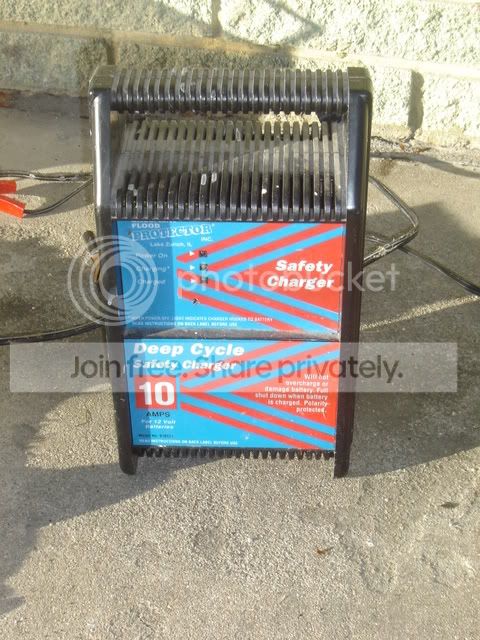
2. You need a battery charger with 12V and at least 2 amps of current. You also need a sacrificial steel part so that the rust from your bike part can attach onto this steel component.
DSC03771.jpg

2a. If you have a battery TENDER you may need to add a battery into the mix to trick the tender into charging the entire time. In my case when the leads were attached from the tender to the part, it would display that it was plugged in without charging at all.
DSC03777.jpg

3. You need a large basin to hold your part and the solution. In my case I used a big old rubbermaid tub. You put in a mixture of water and Washing Soda (Sodium Carbonate!!!). I put in 1 gallon of water + 8 teaspoons of the washing soda, and mixed it around. Now put your part in the solution.
DSC03768.jpg

3. You attach the POSITIVE (+) lead to the sacrificial electrode (steel part). You attach the NEGATIVE (-) lead to the motorcycle rusty part.
DSC03773.jpg

DSC03774.jpg

DSC03775.jpg

4. Plug that baby in, and when you see bubbles forming, your are in business!
DSC03778.jpg

5. Now wait a few hours and you can take a sneak peek at your progress. What will happen is the rust will be replaced by a black buildup which is good. You just brush that stuff off easy at the end. Here is a progress pic after 20 hours:
DSC03770.jpg
 
just a couple of questions

are you sure that its neg to the component your derusting?

i'd have thought it would be pos to that part and neg to say a piece of lead for example. the rust transfers from the rusted part and tries to adhere to the lead, which it will not, so drops to the bottom of the container.

or is it a different set of rules for de rusting? :)
 
Yup I am pretty sure its (-) to the component that you are de-rusting since it worked successfully for the chopped tank and the seat pan that were rusted to s**t
 
dracken1 said:
are you sure that its neg to the component your derusting?

I could be wrong here but, I believe the basic idea is as the negative electrode looses electrons they carry the rust with them to the positive electrode; this would be the reverse of electroplating as it's removing material not adding it. I have used a similar method to etch copper and brass decorations and make printed circuit boards before, but never considered it for this purpose. Great idea!
 
BigBSBusa said:
Have read about it and plan to do it to my seat pan and maybe fuel tank.

Would this work for a fuel tank? It seems you still have to use an abrasive to get he black crap off. So unless the tank is cut open... I ask this because I have a few tanks that have minor rust inside, and Im trying to figure out the best way to go about getting it out.
 
boomshakalaka said:
Would this work for a fuel tank? It seems you still have to use an abrasive to get he black crap off. So unless the tank is cut open... I ask this because I have a few tanks that have minor rust inside, and Im trying to figure out the best way to go about getting it out.

Yes it will this is a very very popular method for tanks actually, because opposed to acid you will not be removing any necessary metal. Not that the acid method isn't a good method.
 
Bouncer said:
Yes it will this is a very very popular method for tanks actually, because opposed to acid you will not be removing any necessary metal. Not that the acid method isn't a good method.

so what about the black stuff that OP said you have to scrub off?

and more about the acid please? Im curious about the electrolysis, but I dont own a batter charger. So I'm really just trying to figure out whats the best way to clean an old rusty tank out.
 
boomshakalaka said:
so what about the black stuff that OP said you have to scrub off?

and more about the acid please? Im curious about the electrolysis, but I dont own a batter charger. So I'm really just trying to figure out whats the best way to clean an old rusty tank out.

I personally have never tried either, but I plan on using the electrolysis method because it doesn't remove any material that is not rust. I will be using this method on my tank. The black stuff should be the "scarring" or "pitting" for some reason the material takes that color when the rust is removed. Scrubbing is not necessary from what I understand. I read up alot about both methods and would prefer the electrolysis. Plus then you don't have to worry about cleaning and cleaning to get the acid out before you prep the inside of the tank with kreem or the por 15 method. Building bikes like these cafe's is all about research and opinion. You will find opinions on everything it comes down to what you feel comfortable doing. What kind of bike do you have?
 
Ive got a few cb350's. Since I dont have a battery charger, and I dont want to deal with acid, Ive heard that putting a buncha bbs in the tank, wrapping it in blankets, putting it in the dryer (heat off), stuffing more blankets around it so it doesnt bounce around, then running it for a few hours will get rid of all the rust.

edit: found this link when looking at kreme and other tank lining kits.

http://www.youtube.com/watch?v=uBXZtLKMV2Q&feature=related
 
Oh I figure I should post this to show the awesomeness of electrolysis:
Seat pan before electrolysis:
DSC03743.jpg

DSC03744.jpg


After 48 hours of electrolysis (takes off that super durable Honda paint easy too!)
DSC03969.jpg
(minus the Bondo of course :D )
DSC03975.jpg
 
krukster86 said:
Oh I figure I should post this to show the awesomeness of electrolysis:
Seat pan before electrolysis:
DSC03743.jpg

DSC03744.jpg


After 48 hours of electrolysis (takes off that super durable Honda paint easy too!)
DSC03969.jpg
(minus the Bondo of course :D )
DSC03975.jpg

I am glad you took my advice man, that turned out great! You spent 0 money plus you didn't lose any necessary material. win win situation.
 
You probably don't want your wire that's attached to the sacrificial anode to be in the water as it will effectively become part of the sacrificial anode and erode away over time or just lose its connection.
 
the problem with doing a tank where the electrode is inside the tank is that electrolysis is pretty much a line of sight procedure, which means the rust will be attracted to the electrode in a linear fashon. there is no good way of ensureing all the rust will be gone with all the curves and bends of a gas tank.

when i did some old car parts a couple of years ago, i used a 5 gal bucket with about 8-10 peices of re-bar clamped to the sides with copper wire to each bar for a 360 de-rusting. unless you have bars (electrodes) on the top and bottom of the piece your working on, you'll only get the sides. and if you are doing a container... you won't get any de-rusting effect inside of the container.

the process takes so long anyway at the best of times, that unless your working on a very important or fragile piece, media blasting is so much more time effective and less labor intensive.
 
timdhawk said:
the problem with doing a tank where the electrode is inside the tank is that electrolysis is pretty much a line of sight procedure, which means the rust will be attracted to the electrode in a linear fashon. there is no good way of ensureing all the rust will be gone with all the curves and bends of a gas tank.

Not true I did this with my Triumph. I connected one electrode to a bolt that I water proofed except for the first 1/4 inch of thread. the other was rebar on the side of the bath tank. The rust bubbled out of the filler neck and to the + lead. For rust removal, it worked great. the inside of the tank was flawless. The pain however was no more. I should have double waxed it first, but I forgot. Ruined otherwise perfect 32 year old paint.

So use it for rust. but protect paint if you don't want to loose it .
 
boomshakalaka said:
Ive got a few cb350's. Since I dont have a battery charger, and I dont want to deal with acid, Ive heard that putting a buncha bbs in the tank, wrapping it in blankets, putting it in the dryer (heat off), stuffing more blankets around it so it doesnt bounce around, then running it for a few hours will get rid of all the rust.

edit: found this link when looking at kreme and other tank lining kits.

http://www.youtube.com/watch?v=uBXZtLKMV2Q&feature=related


Boomshakalaka,

Don't know if you can get this in the States, but they do post this stuff out. De-Ox C from Bilt Hamber is non acid granules which when mixed with water forms a ferrous corrosion removing solution. It is completely safe to use and you can put your hands in the stuff with no ill effects. I have used it to de rust the inside of my Garelli fuel tank which had been left outside for years and was completely rusted. It removed all of the rust leaving bright steel. I don't know whats in the stuff but it's bloody marvellous. No I don't work for them, but I will be using this stuff on my next resto.

http://www.bilthamber.com/deoxc.html

Cheers, Rockets.
 
Back
Top Bottom