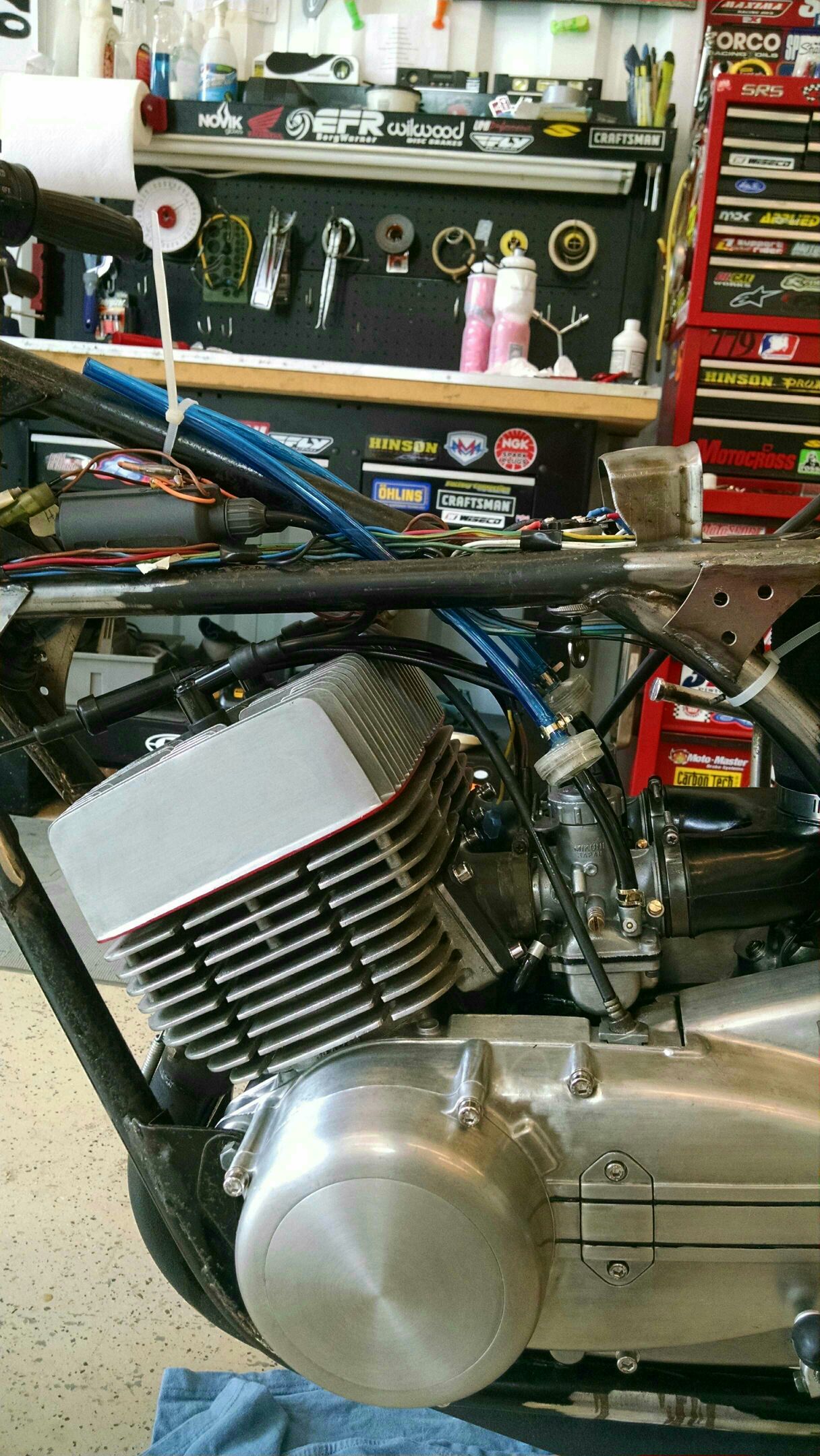
+1. No sense in trying it anymore without fixing the fuel level. I rarely need to replace needles and seats on these carbs. 99% of the time the reason the carbs overflow is because of a mechanical issue with the floats and operating arm that controls the needle. The arm is brass and the little pins on the floats that engage the arm are steel and wear the brass. It only takes the most incredibly slight wear to cause trouble - barely discernible. Make a tiny sanding block with some #400 grit sandpaper and very carefully sand the arm where you see the pin is touching it. Sand it until perfectly uniform and then smooth it out to at least #600 grit. As the floats travel up and down the pin actually has to slide horizontally a minute distance across the arm. Since the whole mechanism hardly moves at all, it wears in exactly one place, and the tiniest bit can cause the needle to not really close completely. You can set the float height by holding the carb body upside down and adjusting the arm to be parallel with the bowl gasket surface. You RD will not rev substantially as it leans out and runs out of gas. When all is well you can leave it idling and turn off the petcock and let the bowls run dry. You will likely notice a very slight pick up in speed when the first bowl empties and starves that cylinder, but it is a pretty small effect.
Be very careful to not over tighten the bowl screws as the bodies are pretty soft and it's easy to bend down the corners where the screws are. It is a long span between the screws and the gasket will not compress in the middle once you bend the bodies and the carbs will weep fuel residue.





![IMG_20150603_162127837_HDR[1].jpg](/data/attachments/62/62680-32e0b075fc89dfcc6e7943c95a716747.jpg?hash=MuCwdfyJ38)