Spacer for 320mm brake rotor on yamaha XS wheel and 4 or 6 piston caliper

Trav

New Member
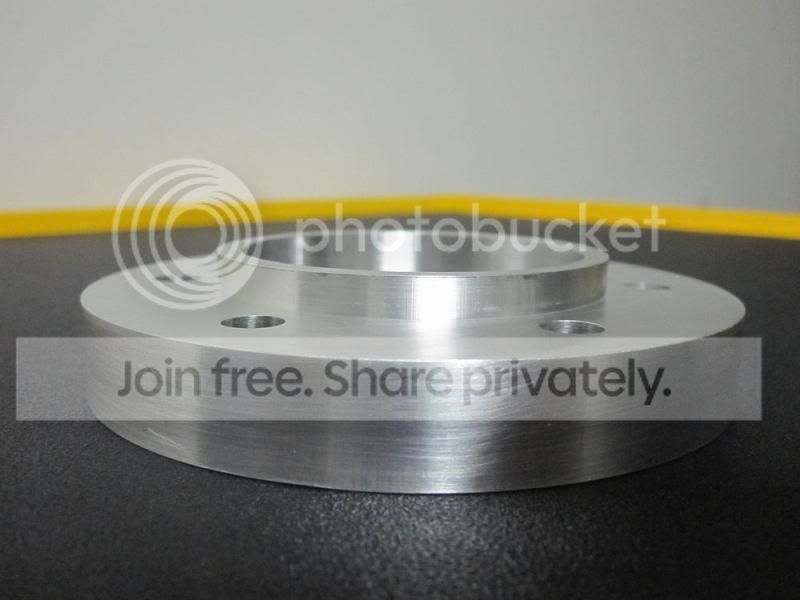
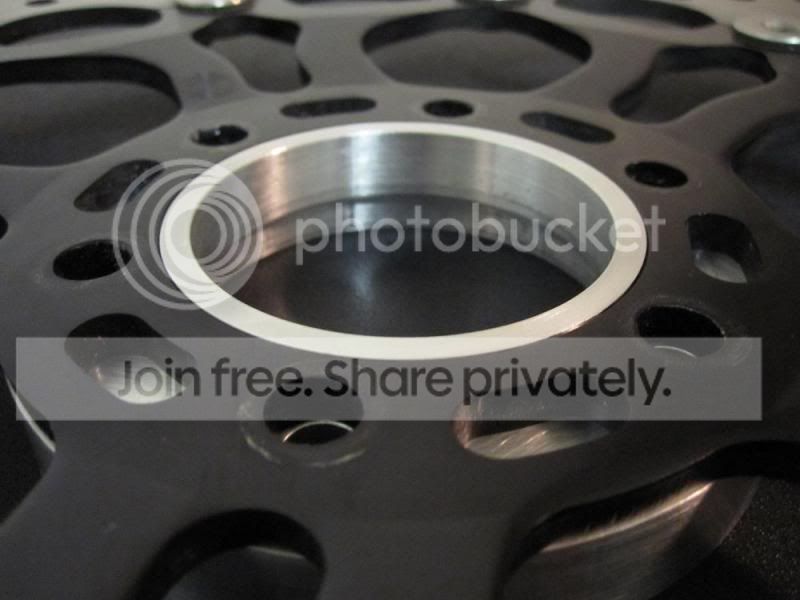
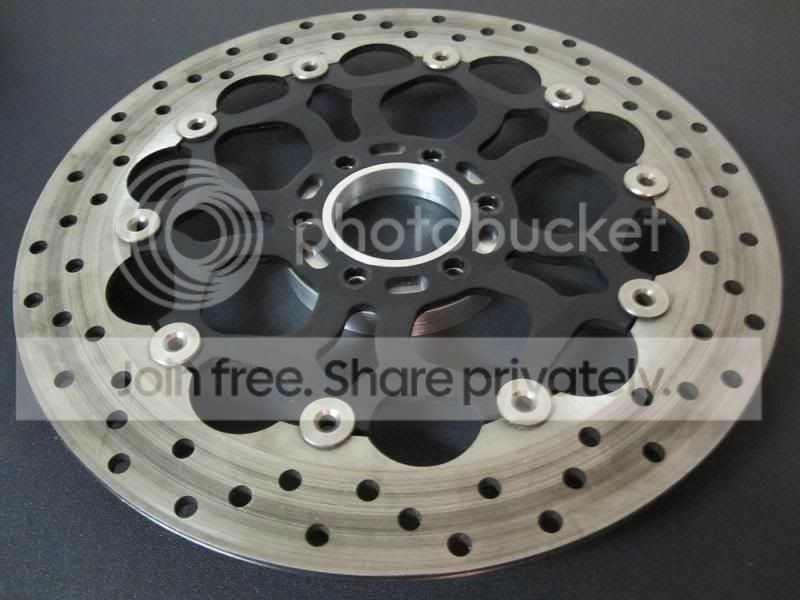
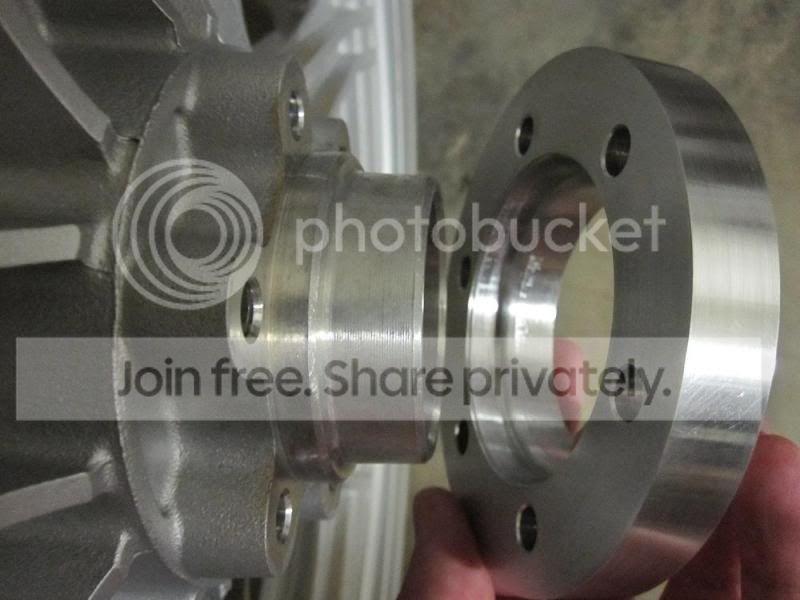
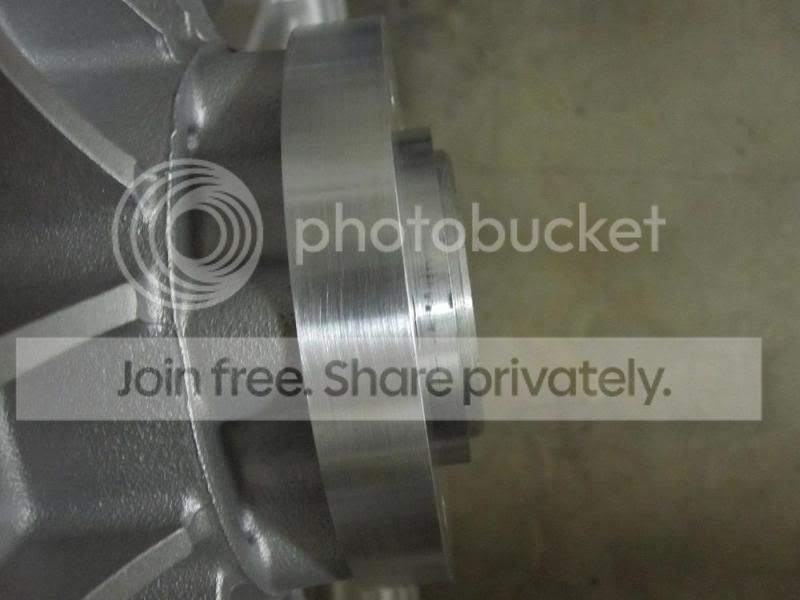
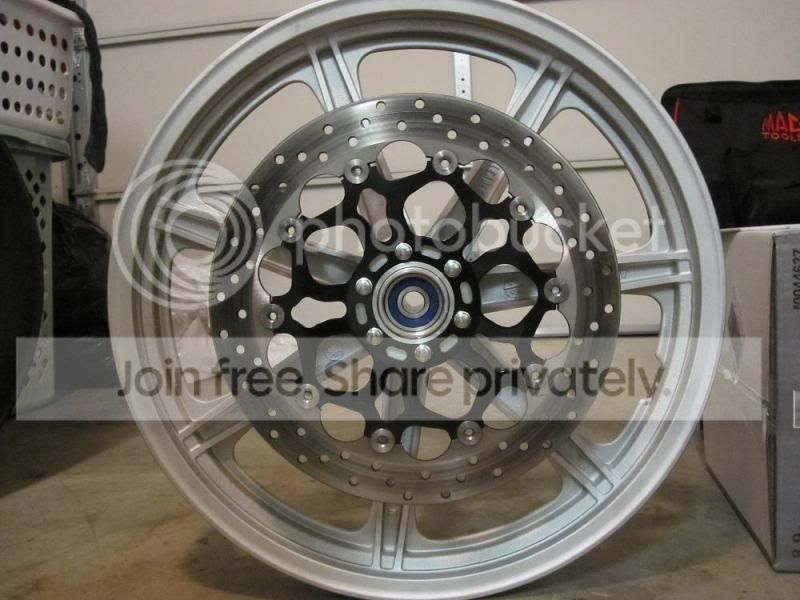
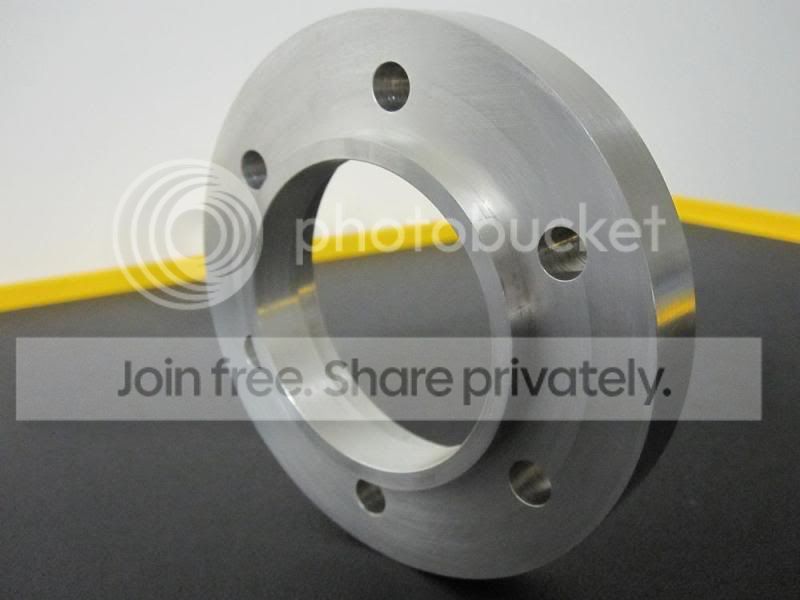
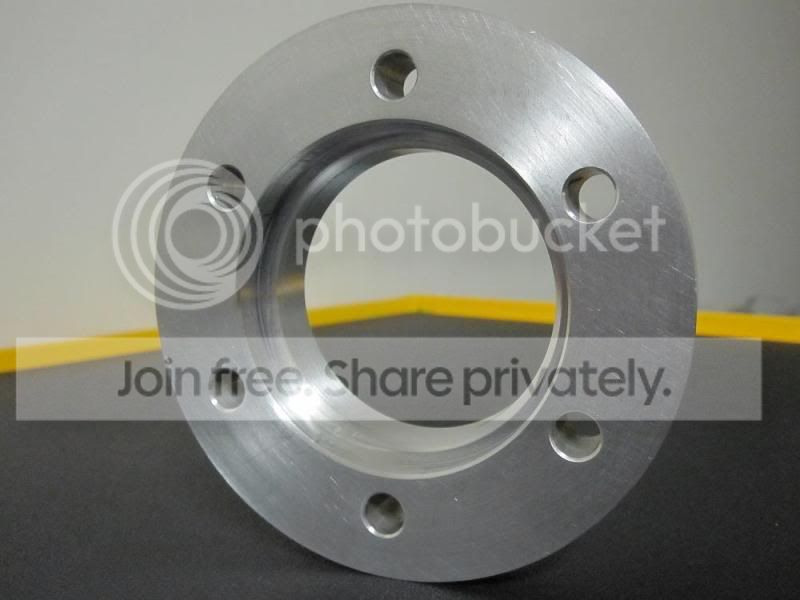
Hey guys, I recently had a spacer made up for installing a 320mm disc with the proper 6-bolt pattern (like from an FZR, etc) onto a yamaha XS wheel. The spacer offsets the disc enough so that an opposing piston caliper (such as a 4 or 6 pot) can be mounted and clear the spokes. It has a recess on the inside to accommodate the shoulder ring that the factory rotor centers on, and another shoulder machined onto the outside to keep the new rotor concentric. Everything is slip fit, but it's nice and tight within a few thousandths. A local guy who does high end CNC work made it up for me.
IMG_0088.jpg


IMG_0091.jpg


IMG_0092.jpg


IMG_0108.jpg


IMG_0113.jpg


IMG_0093.jpg


IMG_0095.jpg


IMG_0102.jpg


IMG_0098.jpg


Right now, the offset is .580" which more than makes clearance for the caliper. At this dimension, it puts the mounting lugs for the caliper I am using in line with the mounting lugs of the fork lower, for which I will be making an offset bracket. I'm using this setup on a KZ550 with GPz750 front forks, so it's a bit of a mongrel. However, I could easily have them made at any offset that would put the disc in a usable place, say for stock XS650 forks. I just don't have any reference for that sort of thing. It could also be used on an XS hub for a spoked wheel, which opens up a lot of possibilities. Not everybody wants to use a cast wheel, but the hubs are the same.

Just thought I'd post it and see where it went! ;D
 
damn man! great work!

this has been done before (google fishead big brakes or something like that) but great work!

total cost?
 
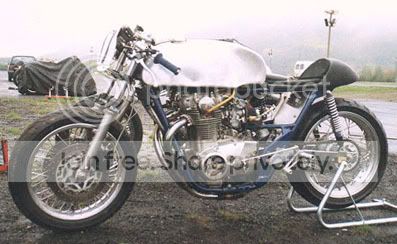
Yea, I'm not the first to have the idea. I saw this XS650 on the web years ago, and have had it in my head as a goal since.

xsrace.jpg


I figured some stuff out, mainly that the rotors were off an FZR by the pattern of the carrier. It took awhile until I got a hold of a wheel, calipers, rotors... and realized there was no way it would work without spacing the caliper away from the spokes. Of course, other people have figured this out, too, and I've actually seen an article in classic bike where they make just such spacers for a Triumph T160 street tracker project running an XS front hub. I've also seen kits on Japanese websites for SR400/500 (which use the same wheels).

I actually hadn't seen that fishhead website before. It looks like some of those discs are re-drilled, like for the 4-bolt KZ wheel, which I imagine is fine (I think I've seen some guys do it using harley hubs, if I'm not mistaken) but I am concerned about making sure the rotor stays concentric. I don't know if there is any means to maintain that.

I can't say for sure, but I've probably got as much into it as buying one of those kits.. but I really couldn't do that. I'm not looking to try and market a kit either... I wouldn't have thought so, but from the way the fishhead guy gripes, there doesn't seem to be much providence in it.

The spacer itself was $150, but I don't know if he was being kind. He's a pretty friendly guy and we chatted for quite a bit. I first made one up in eMachineshop software (who I've never used for anything) and the quote was something like $200 and they would only promise +/- .005" or something like that!
 
+/- .005" is pretty good tolerance unless you're working for NASA....

Nice looking adaptation, should look nice and it'll be a better than oem....
 
Yea, but it was also the idea of not actually just going somewhere and talking to somebody and having it done. Plus, I gave him measurements, but also the wheel and the disc and he knew what I wanted to do and I knew it would come out. I've never used the "emachineshop" before, but it seems like a novel idea.

I guess it's relative. The guy who did the machine work actually has done stuff for nasa :D I was just recently laid off as an aircraft structural tech with northrop grumman.. when you get into that kinda thing, it's hard to relax.
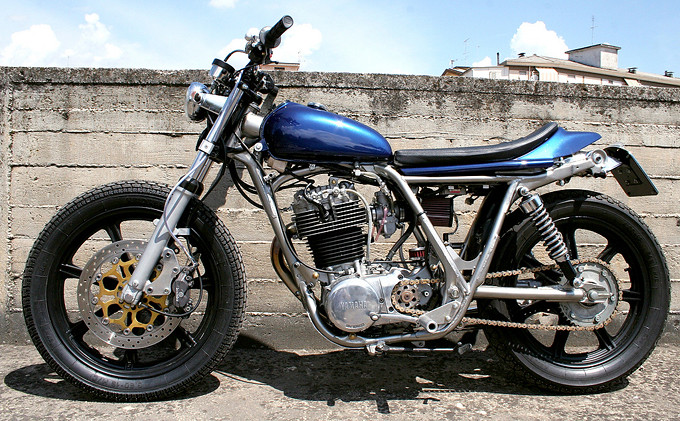

Yea, it's how it seems to go. Once an idea comes about, the law of whatever governs such a thing means that I'll see it start to pop up more and more on the internet (and I'm sure that's only percentage of people actually doing something in the world.

This showed up on pipeburn on wednesday:

4726268499_fc6f9bbf0f_b.jpg


I changed the stroke of the fork, creating a shorter spacer, a spacer for the brake disc which is a Ducati 996 because otherwise the caliper from a Ducati Hypermotard would have hit against the spokes of the rim.

http://www.pipeburn.com/home/2010/6/23/sr500-street-tracker.html

I like the bracket for the caliper. I plan on doing something like that, if it'll work out. The radius between the mounting lugs takes away a little weight, but takes away even more 'weight' as far as asthetics are concerned. It doesn't look like the rotor needs to be sapced out as far for a stock yamaha application, as I'll be putting the rotor on the right side. I have it spaced out too far for it to work with the speedo drive on the left side. The mounting lugs on the kz forks are alot thicker, though, so that's why.
 
for some things on motorcycles, you dont want perfect...

take a drilled rotor; perfect hole patterns will sometimes cause the rotor to vibrate at a certain frequency, causing less brake power and in rare cases the rotor to shake itself in all kinds of ways.

because of this rotors holes are drilled imperfectly; rotating mass isnt perfect, but its small enough that the benefits outweigh the losses.
 
Rocan said:
for some things on motorcycles, you dont want perfect...

take a drilled rotor; perfect hole patterns will sometimes cause the rotor to vibrate at a certain frequency, causing less brake power and in rare cases the rotor to shake itself in all kinds of ways.

because of this rotors holes are drilled imperfectly; rotating mass isnt perfect, but its small enough that the benefits outweigh the losses.

Umm....huh? The hole pattern on all of my drilled discs (factory) are perfectly spaced and I don't get that problem. I've drilled them myself and come pretty damn close to perfect....it's easier with a milling machine and an indexer....no issue. Where did you hear that David?
 
Wow. That looks great.

I have a set of 4 pot gold Brembos I think with 65mm spacing I would be willing to part with if your interested.
 
Swagger said:
Umm....huh? The hole pattern on all of my drilled discs (factory) are perfectly spaced and I don't get that problem. I've drilled them myself and come pretty damn close to perfect....it's easier with a milling machine and an indexer....no issue. Where did you hear that David?

Yea, that's a new one by me. I'm not sure what is specifically meant when saying the hole pattern is 'perfect'.. I would think that would have more to do with the pattern the holes are laid out in rather than the fact that they are located too precisely.

What's trying to be said is that the holes in the rotor can cause a resonant frequency. I can buy that, though I never heard of it being a problem. Soldiers walk in route step rather than marching across bridges because in the off chance the frequency is just right, the bridge can collapse.

Anyway, that's pretty much an aside from the topic. This spacer isn't too 'perfect' :D I think there's more danger in having the rotor rotate off center than having it too centered. Wheels are balanced for a reason.
 
resonant frequency... exactly that... words escaped me at the time.

ive read it on a couple of posts online.... havent actually seen it myself. supposedly the more holes you have the greater of a problem it would be. factory disks dont have as much holes as what im putting in em :D
 
Actually, I think it was me that brought up the whole frequency problem in a build thread. I googled "drilled rotors" or something and one of the sites mentioned it.

It was more of a safety concern that I hadn't thought of and was curious if anybody else had thought of it.
 
can you please give us a mechanical drawing..or anything..so that we can make one for us?

i would really appreciate it!!!!


i got an SR500..i think it has the same "6 bolt" pattern!
 
Swagger said:
+/- .005" is pretty good tolerance unless you're working for NASA....

Personally I think +/-0.005" is a woodworking tolerance, unless its a non-critical part? (thickness isn't critical, parallel is)
They probably said+/- 0.0005" which should be easy with CNC.
To be honest though, +/-0.001" is plenty close enough for a brake spacer
 
crazypj said:
Personally I think +/-0.005" is a woodworking tolerance, unless its a non-critical part? (thickness isn't critical, parallel is)
They probably said+/- 0.0005" which should be easy with CNC.
To be honest though, +/-0.001" is plenty close enough for a brake spacer

The chatter on that fork brace was more than .005" PJ, was that silver painted plywood?
 
Swagger said:
The chatter on that fork brace was more than .005" PJ, was that silver painted plywood?


hahhahahhhhhahhahahahahhaha.... good one swagger ;) ;D
 
crazypj said:
Personally I think +/-0.005" is a woodworking tolerance, unless its a non-critical part? (thickness isn't critical, parallel is)
They probably said+/- 0.0005" which should be easy with CNC.
To be honest though, +/-0.001" is plenty close enough for a brake spacer


Yea, I agree.. well, I don't work with wood, but it sure as hell is sloppy for a machined part! The Emachineshop software/web service has +/- 0.005" as the smallest number in the 'general linear tolerances' specification perameters. This is why I brought up the fact that I explored that option but decided there was no way. They do offer +/- 0.001" in the 'flatness' specification, though ::)


Ah, if you have a wheel, and you have a way to have one made, you don't really need a mechanical drawing from me! It's pretty strait forward. The whole idea was I figured I could have more made for anybody who wants them in whatever thickness they thought they needed.
 
Back
Top Bottom