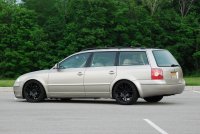
HELP! Volkswagen people......or just car people in general!

MILLENNIUM FALCON

Over 1,000 Posts
DTT BOTM WINNER
I'm not a member on any car forums, and since most people on here are just generally intelligent I figured I would you ask for advice. My wife's car is a 04 passat 1.8turbo. Today when she pulled into the garage she was followed by a large cloud of smoke. Less than thrilled I asked the usual questions. Was it overheating, losing power, engine light etc..etc. She answered no to all of these. SO I got changed and went out into my balmy 11 degree F garage and started checking things out. Coolant level was good, oil was slightly low, but it is due for a change so I wasn’t too surprised. So I looked around some more and determined that the incredibly stinky smoke cloud was being caused by excessive amounts of synthetic oil running down the back side of the engine and landing on the converter. It was making a small puddle under the car so I assuming that whatever happened recently happened because the oil was barely low. (less than a qt.) So I started to look around for the source of the leak. This is no easy task on this car. Lots of plastic crap in the way. So I decided to remove the intake diverter valve so I could see the back of the head. This is the general vicinity of the oil source. Once I got the diverter valve off I noticed that it was completely packed with slush. Not antifreeze but frozen water. and some oil sludge. All the lines attached to the valve and all the way to the intercooler has clear frozen slushy in them. I read that the TDI jetta's had this problem, but haven’t heard much about the gas motors doing this. So what I think happened was that all those lines and the valve were plugged up and the engine was being pressurized and this was pushing oil out of a breather. This is the only explanation I can come up with. Once I thawed everything out and put it back together it all seems fine. No oil leak, no smell, and the engine temp is where it should be. I don’t know exactly what happened but I read that air going through the intercooler can condense and freeze causing ice to build up. My first instinct was a head gasket but the oil was clean and the coolant level was perfect. and the ice was clear not red and stinky. I didn’t have time to drive it tonight after I put it back together so I will try it tomorrow and see if it comes back. It’s just strange because it was cold today, but it’s been colder before. It was about 18f when the incident occurred. Any input would be appreciated. Thanks.
 
Water behind the diverter valve huh? I'm in no way an expert on VW's turbo engines but that doesn't sound good. You don't want that much water dumping into the engine...

Any rips in the valve? Intercooler in okay shape? Any codes/CEL?
 
Yeah that what i was worried about but I don't think it was enough water to and damage. I tore everything apart and got all the ice out.....it was more slush than ice. The valve seems fine the inter cooler should be fine it wasn't packed. I called two local mechanics one of them was a vw specialist and they both said that they had never seen or heard of such a thing......great! why do I always get the obscure problems that no one has ever had before. I think I'm going to get my wife a horse and buggy. ;)
 
I am also not familiar with this particular engine system, but I have a couple thoughts about this.

There may have been some specific environmental conditions that led to this. For instance, mist or fog with dropping temperatures.

Also, it's possible that the thermostat was stuck open, and the engine was running below normal temperature.

For now, I wouldn't get my knickers in a twist. This may simply be an episode caused by conditions, and not a chronic, repeatable problem.
 
I would agree with ADC on the possible stuck thermostat and evironmental conditions. It could be engine not quite up to full temp, hot air hitting cold hose and condensating/freezing to slush and then plugging everything up. Ask you wife if she made a couple of short trips before coming home? As is just enough to circulate air then stopping and letting engine cool, then starting again.
 
MILLENNIUM FALCON said:
I'm not a member on any car forums, and since most people on here are just generally intelligent

Wow.

Anyway, how long is your wife's average commute? If it is not far enough to get the car up to operating temperature AND keep it there for 15-30 minutes, then water that condenses in the engine over time from the heating and cooling cycles of the weather and running will not be turned to vapor long enough to let them evaporate out of the engine oil breather system. So when you run the engine this accumulated water is going to be whipped into your motor oil, and in extreme cold as it passes through the engines crankcase breathing system the water will freeze into crystals and accumulate in areas that cold air can get to.

If you change your oil wait for a time when the car has sat for most of a weekend then jack the car up so the drain plug is at it's lowest point, you may then see water coming out that has been sitting in the bottom of the oil pan. A lot of current car manufacturers have lengthy intervals between recommended oil changes despite laboratory testing of motor oils showing that is loses a very large part of it's qualities after only 1000 miles. I change the oil in my car at no more than 2500 miles if I can help it. This keeps the oil fresh and helps get rid of water in the engine.

In extreme cases you can tell there is excess water in an engine by the sound alone. If water has accumulated in a car's engine over time in a spot that does not get drained between oil changes and a significant amount is whipped into the oil it will make the oil pump whine as it is pumped through, an oil pump passing only motor oil will be very silent.
I saw this first-hand when I took an old-man's car for a 600 mile road trip. The owner had kept it mostly garaged and drove the car very little. When the car was jacked up to change the oil on the side of the filter and drain plug, the drain plug was higher than the bottom of the oil pan so as to not drain it completely. At the start of the trip I noticed an unusual running sound from the engine but could see nothing amiss, no bad serpentine belt or noisy water-pump or alternator or fan bearings. At the mid-point of the trip I stopped for fuel and checked the oil. There was a LOT of emulsified oil-water slurry on the oil stick and in the valve cover under the oil cap, reminiscent of an engine with a bad head gasket or cracked water jacket. All I could do at this point was try to finish the trip and keep an eye on the coolant and oil levels.
During the second leg of the trip the unusual whining noise the engine had at the start disappeared and it sounded much better. At the end of the trip I looked at the oil dipstick and valve cover filler cap and all the emulsion was gone! The engine had run enough to get an apparent large amount of condensed water out of the oil pan and the oil itself, letting it evaporate out of the engines crankcase ventilation system. I would bet that if I had done the same trip in single-digit temperatures, that the water vapor would have condensed in the breather system and plugged it up much like you are seeing with your wife's car.

That is what I got.......
 
A friend from my work had a water leak on his jetta, I'm not an expert on vw's but i think he said there was a plastic elbow the coolant flows through into the head or block, can't remember but his was leaking and it was on the back side of the engine..

Sent from my DROID RAZR using Tapatalk 2
 
Ok, now for a real post(keyboard verse phone haha)


There's a few scenarios that could have happened. First my question is what color is the smoke? White, blue, black??? Also when was the last Timing belt job and has the engine been flushed for oil sludge buildup?

1. your turbo is about to go out/already has. the main seal gives out and puff goes giant clouds of white smoke

2. One of the oil or coolant lines is leaking either at the turbo side or possibly the block

3. there is a leak somewhere in the charging system meaning it's possible that she bottomed out and punctured the front pipe that runs just below the subframe on your B5 Passat.

4. Motor has seen too much sludge and has damaged internals thus letting oil past the rings creating blowby.

5. the downpipe has cracked or the gasket has failed somewhere on the turbo or manifold.


The 1.8t is actually extremely simple. Plastic covers pop off pretty easy etc...I've had countless 1.8t cars and live by them. If the DV was full of sludge, odds are there will be something in the airbox as well. With that there may be issues with the DV thus meaning time to replace. The very first thing I do to every 1.8t car is change the DV and put greentop coolant temp sensors in the car.

As for the leaking elbow described above, yes this is extremely common on these cars. I think VW really wants to be aircooled anyway haha. The flange on the back of the head holds the coolant temp sensor, it can leak overtime, however with its location it is not possible for it to smoke, they are plastic however I've never heard or seen one explode. The pipe running in is a hardline. You can replace the rubber oring but it will still leak. It is best to replace the entire housing if this is leaking(takes about 15 minutes)

Basically it sounds like you've done some good cleaning however I suspect this will re-occur if not addressed further.


-Keith
 
Thanks for all the good info guys! It does make sense that this has happened now....my wife started a new job about two weeks ago that is about 4 miles from our house. The car doesn't really get a chance to warm up. The smoke was not coming out of the exhaust.....it was being created by oil dripping onto the exhaust and being burnt off. now that I have everything thawed out and cleaned the drip of oil has ceased. I am very confident that it was from to much positive pressure in the engine. The CEL light i got was "purge valve pressure fault" so I'm sure this was all related. I have recently replaced the cts with a green topper. I would like to change the thermostat too. I really would like to get a new DV valve as well. everything else looks good. (visual check only) No cracks or leaks in the manifold etc. I wouldn't be surprised if the turbo seal is leaking. I know these engines are prone to sludge buildup so that probably doesn't help. What is the best way to de-sludge/flush these engines?
 
I've had excellent results with "Gunk". I do it with fresh cheap oil, then change it again instantly after doing the flush. I then will run seafoam through the intake via the brke booster hose. I've gotten some really good results. I use to have an 04.5 Passat as seen below :) Along with a few other Audi's and junk.

The only thing that concerns me is where the oil came from... there's nothing on that side of the engine minus the oil feed line to the turbo. The cooler is built in to the filter on the driver side, outside of that the only other way for oil to leave the engine is through the crank vent is on the intake manifold side and does not interact with the other side of the engine. I suppose the oil cap could have a crack in it thus releaseing oil(I've seen that only once). Sorry, I keep going on about the whole oil thing.... I just have fears worse than you I guess haha.


-Keith
 

Attachments

  • image.jpg
    image.jpg
    124.2 KB · Views: 448
yeah i am kinda confused by where the oil came from.....maybe there is a crack in the head or an external head gasket leak. it looked like anywhere that didn't have a really good seal oil was pushed out. bit if it was something serious i don't know why it would stop leaking. i guess i should be clear that there was a bunch of ice and a "little" water in the lines. I'm hoping its something simple but i wont be surprised if its something major. i will try to flush everything and give it an oil change.
 
Keep me posted for sure. If it turns out to be a freak occurance or something worse I want to know so I can log it away in my brain haha.

-Keith
 
"Engine flush" is snake oil, IMO. Good quality oil, particularly a brand name synthetic oil, is loaded with detergents that clean sludge from the engine, hold it in suspension for the filter to remove, or drain out with oil change. Fact is, I haven't seen engine sludge since the 70's. It just doesn't happen in modern engines anymore under normal conditions.

A 4 mile commute is not "normal conditions." It is defined in the owner's manual as "severe service," and requires more frequent oil change intervals. So long as the weather is cold, I would suggest that you take the car out for a good highway run of 20-30 miles every weekend to purge collected moisture out of the engine. Remember, water vapor is a by-product of combustion, and a cold engine has a bit of blowby, and the moisture will condense inside the cold crankcase. The moisture helps trap corrosive by-products of combustion, so it's good to make sure the engine gets up to full operating temperature at least once in a while to drive off the moisture.

Another issue that happens with turbochargers is coking of the oil in the turbo bearings. That's why you should always use full synthetic oil in a turbocharged engine because synthetic oil tolerates the high temperature that is common in turbochargers.
 
I see two problems and one I'm surprised has t been mentioned by all the "1.8t experts"....first problem with the water in the DV I would say is the turbo starting or already being bad, the second problem which is the one I'm surprised no one mentioned addresses the oil at the back of the cylinder head…it's very coming for the timing chain gaskets to fail and leak back there, if they haven't been changed yet then it will have to be done eventually.

Hope this helps
Adam.
 
Alpha, we've actually seen the "return of the sludge!" in a lot of late model cars lately. The manufacturers are suggesting very long oil change intervals on cars that run hot for emissions reasons, and the result is sludge when regular dino oil is used. It's pretty bad on Toyota 4 and 6 cylinders from 96ish to 02ish and 97ish to 04ish turbo 1.8 liter VW / Audi (VAG) vehicles. It appears that poor engineering in regards to managing condensation in the oil is also part of the issue.

But, like you said, good quality synthetic oil and proper maintenance heads off most of these issues. I run Rotella full synthetic 5w-40 in my turbo car, as it is rated for severe duty use in turbo gas and turbo diesel vehicles, and have been very happy with it.
 
My commute from home to shop is only 3.2 mi. I like my shop being so close, but I don't like that my engine never gets up to operating temperature in my car OR on a bike. Yesterday the temp was around 23F. My engine was acting really funny when I got there. I think some sort of passage got iced up. It ran fine going home.

Even though I have fairly short mileage on the oil in my engine, I will be changing it as soon as the weather warms up.
 
AlphaDogChoppers said:
My commute from home to shop is only 3.2 mi. I like my shop being so close, but I don't like that my engine never gets up to operating temperature in my car OR on a bike. Yesterday the temp was around 23F. My engine was acting really funny when I got there. I think some sort of passage got iced up. It ran fine going home.

Even though I have fairly short mileage on the oil in my engine, I will be changing it as soon as the weather warms up.

I feel like if you can let the thing get up to normal operating temperature once a week or so the water will vaporize and get sucked out of the crankcase by the PCV system. At least that's my excuse to let my car idle for 10 minutes to warm up in the winter :D
 
Back
Top Bottom