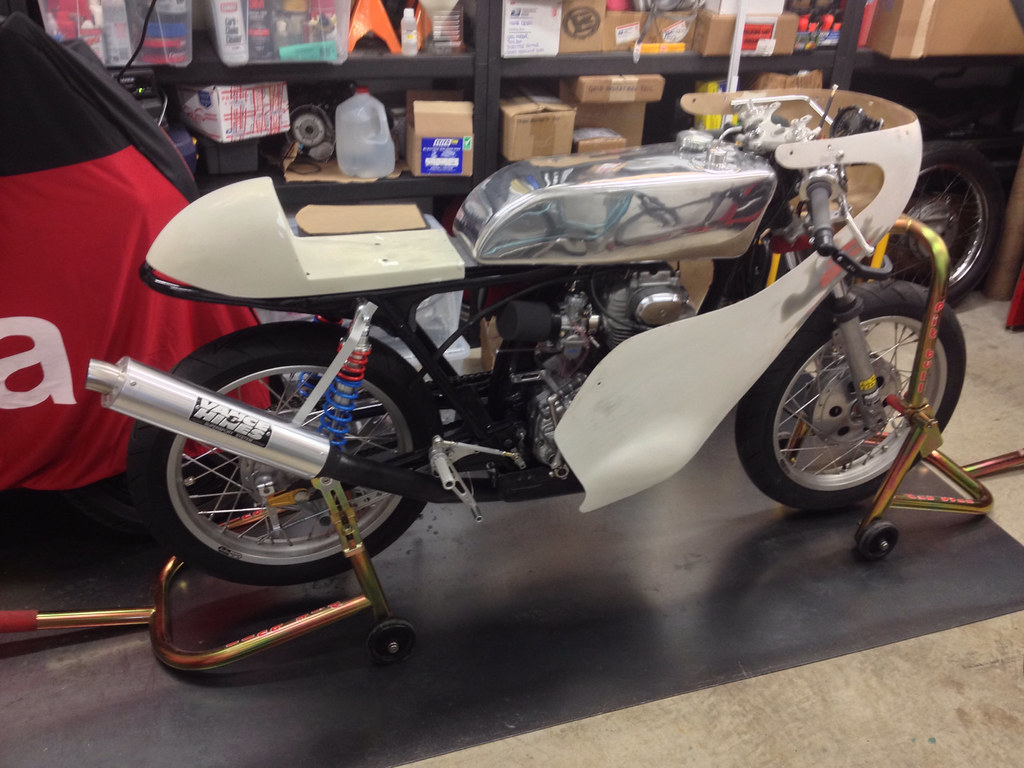
vintage race CB350 - last 10% is the hardest

Re: vintage race CB350 - fitting PVL ignition

Thanks for all the help guys! It's nice to receive the reassurance and the technical advice.
 
Re: vintage race CB350 - fitting PVL ignition

eyhonda said:
DPST is dual pole, single throw meaning two switches operated by one button. In the off position, the two kill wires will be isolated/open and in the on position they are shorted together (the other two poles are wired together then grounded).

DPSt has two switches in one package. The two circuits are not connected to each other. Of course once that switch is in the CLOSED position, both are grounded. My comment was that PVL/Penton say to use a DPST which means that using a single switch diodes are required. Are we saying the same thing with different words?
 
Re: vintage race CB350 - fitting PVL ignition

Yup, saying the same thing. I may have added a little confusion. Yes, the switches are separate in the DPST. In my parenthesis, I meant one end of the pair is tied together when you wire it that way. So, you either use a DPST alone or a SPST with diodes. It gets confusing when you try to describe wiring without a diagram. But yes, Teazer, we are on the same page.
 
Re: vintage race CB350 - fitting PVL ignition

AHRMA requires all kill switches be mounted to the handlebar. I know a lot of WERA guys just run a toggle switch mounted through hole to a plate affixed to the stock gauge mount on the upper triple clamp. But I really don't want a clunky DPST toggle switch on my handlebars. Accordingly, I'm determined to make a SPST on/off style handlebar switch work. Apparently I need a diode but I'm not smart enough to figure out exactly what I need based on PVL specs and my lack of electrical engineering knowledge. My guess is that a 1N5408 diode will work?
 
vintage race CB350 - fitting PVL ignition

Just checked my ON/OFF switch and it's normally closed when in the ON position so it's no good for PVL. So I ordered a normally open CR style momentary kill switch for the handlebar. I might just use that (simpler is better/ more reliable) but I might also wire in a DPST toggle fixed to a plate where the stock gauges mount to the upper triple clamp. That way I have handlebar switch and a positive acting switch. Downside of that plan is more potential failure points.
 
vintage race CB350 - fitting PVL ignition

Today, I discovered the crank bolt hole on my Honda CB350 is not fully threaded. The first time I installed the PVL rotor, I threaded the crank bolt by hand until snug and then have it a few quick blasts with my pneumatic impact driver. Apparently, I bottomed out the threads but fortunately I did not break the crank bolt. I removed the bolt and measured the depth of the treads on the hole using the face of the rotor as my datum point. I got 32.83mm first time. I shortened my crank bolt to 31mm and installed it again. This drew the rotor even further onto the crank but I suspect the bolt bottomed out again. So tomorrow I'll shorten the crank bolt even more until I'm satisfied that the rotor is fully seated on the crankshaft and the crank bolt is not bottomed out on the threads.

Because the rotor hole is tapered there must be a limit to how far the rotor can be drawn onto the crankshaft. Would it have stayed put had I not shortened the bolt? Maybe. But it seems there is increased risk of breaking the bolt if not shortened.
 
Re: vintage race CB350 - fitting PVL ignition


Drawing not to scale. This is just a quick sketch to show various dimensions related to the installation of a PVL magneto ignition on my Honda CB350. The other day I stumbled across a 5 year old thread on Caferacer.net called PVL Timing. Folks lamented how the same questions come up every time someone installs a PVL because the generic instructions lack certain details. Tex Mawby recommended Honda CB350 owners shorten the stock crankshaft bolt because, "the stock bolt is too long and will eventually break off in the crank when using an impact to take it on and off."

When I read this I had already installed my PVL rotor. Fortunately, I had not snapped the bolt off inside the crank yet! The crank snout is tapered and so is the inside of the rotor. As the bolt is tightened, the rotor is drawn onto the crankshaft until it can go no more at the recommended bolt torque (Honda service manual says 17 ft-lbs). I shortened my stock crank bolt a few threads and reinstalled the PVL rotor. To my surprise, the rotor was drawn further up onto the crank snout than previously. This meant the first time I had installed the PVL rotor my stock crank bolt had bottomed out the threads before the rotor was fully seated on the crankshaft. I couldn't be certain that my newly shortened bolt wasn't experiencing the same problem. So I took everything apart and measured using my trusty digital calipers.

I assumed that if the rotor was pushed all the way onto the crank shaft until it was flush than the stock bolt could be no longer than 25.8mm. So I took that figure and subtracted a thread or two and arrived at approximately 24mm thread length. This would ensure that no matter how far the rotor was drawn onto the crank snout the bolt would not bottom out on the threads. In reality, the PVL rotor stops at some point before becoming flush with the end of the crank shaft. With my new shortened bolt I reinstalled the PVL rotor. Using the highest point of the stator as a datum I discovered that the PVL rotor was approximately 1mm further onto the crankshaft than previously. I was now satisfied that my rotor was fully seated on the crankshaft and the threads were not bottomed out.

I can't tell you how much you should shorten your bolt as this is a tolerance issue and there's no telling exactly how much your bolt needs to be shortened without having your exact crankshaft and PVL rotor. Ideally, you want to shorten it as little as possible. craig641 suggested a 1/4" or so, which is about what I ended up taking off. I probably could have gotten away with a little bit less than that. I hope this info proves useful to someone else out there following in my footsteps!


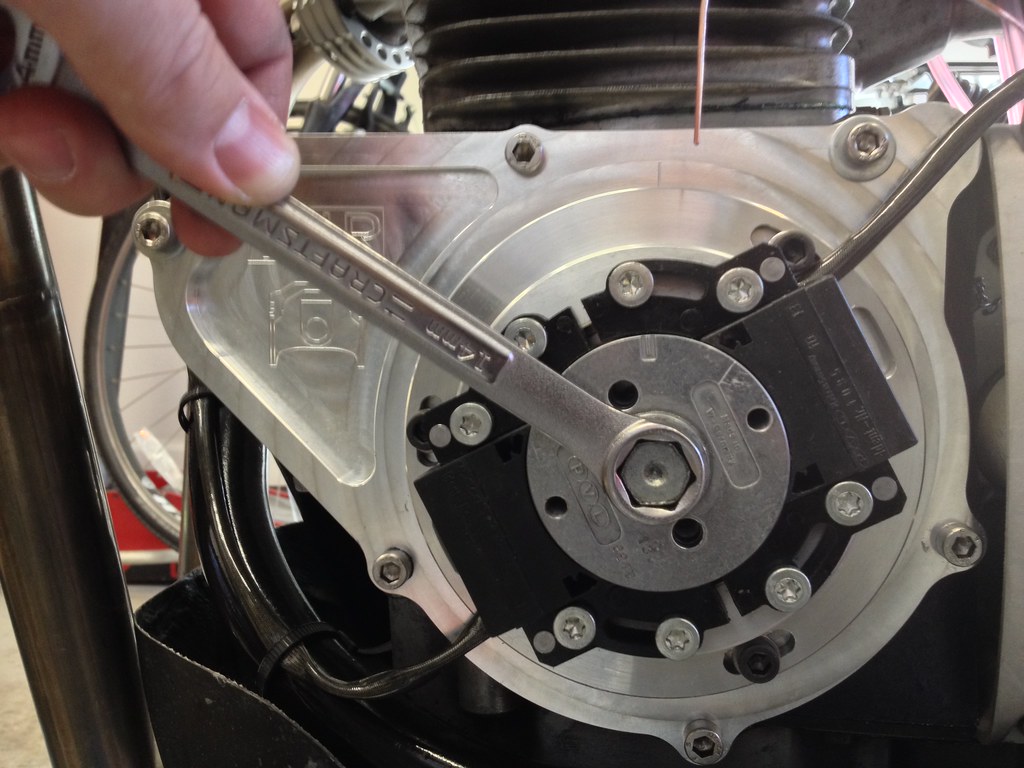
So here I am shortening the crankshaft bolt. This picture was taken after I had already shortened it a few threads but before it was cut to the final length. Those are my homemade soft jaw faces made from sheet metal. Maybe one day I'll get fancy Wilton copper jaw faces. Or maybe not. These seemed to get the job done okay.


Here is the piston deadstop I made. This tool is used to determine TDC using the angle bisect method. Take old spark plug, smash out insulator and empty all the guts out, run 11/32 drill bit through center, tap hole for M10x1.25x60 bolt. I have no clue if this bolt is long enough but it was the longest one my local hardware store had. My bolt was only partially threaded so I cut more threads using appropriate die. I have two M10x1.25 dies from two different tap and die sets. Use the big one for best leverage. The small one won't cut it. Clean everything really well with brake clean so no foreign debris enters the engine. Must be used in conjunction with a crank mounted degree wheel and pointer. Once I verify TDC (and compare it to the marks on the THR PVL mounting plate) then I will use a dial indicator to set the recommended 2.0mm ignition advance.
 
Re: vintage race CB350 - fitting PVL ignition


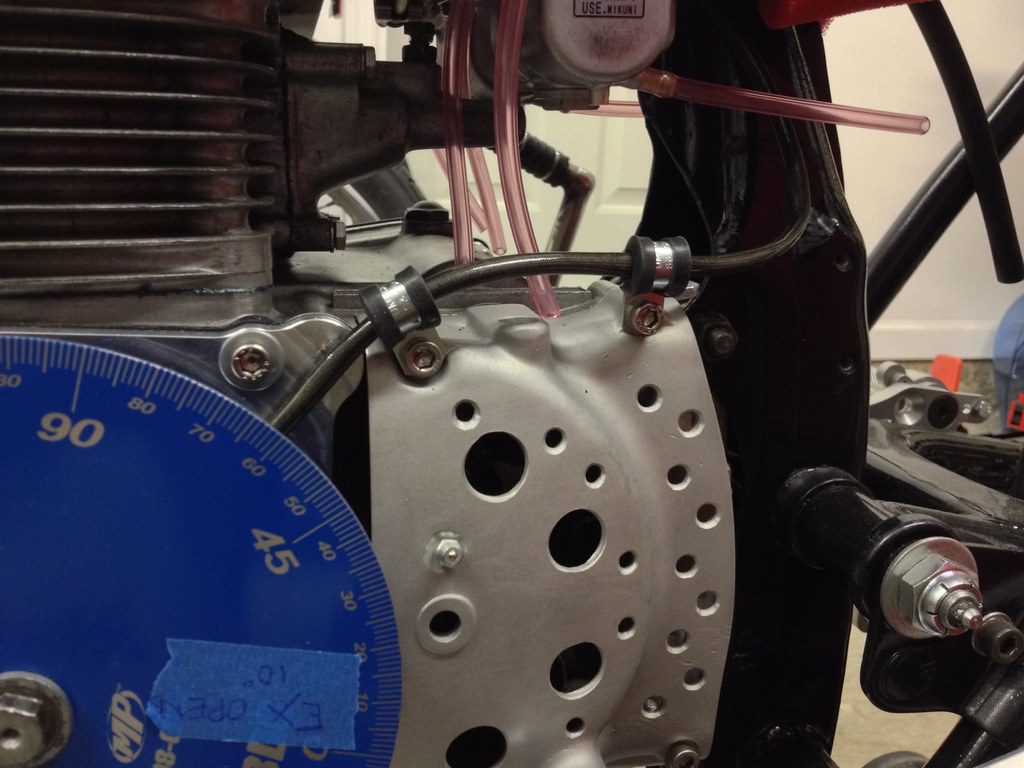
PVL wire routing. I used rubber lined p-clamps and zip ties to secure the PVL wiring to the bike. I don't want the wires to touch anything that could cause damage. Degree wheel and piston stop helps me determine exact TDC and from there I can set ignition timing using a dial indicator. Useful tip: loosen the rocker arms so the valves don't open when calculating TDC.


Exhaust spring hooks removed. In an earlier iteration I had fit spring hooks to the head pipes. I was thinking about making head flanges so I could quickly remove the exhaust by unhooking just two springs but the way the head pipes are made it would be too much effort to rework the mounting system. So I've decided to stick with the heavy OEM split flange mount.


Checking belly pan and exhaust fitment. I've relocated the megaphone mount further back but I don't think I moved it far enough. Also, the angle of the megaphone has created an interference at the back of the belly pan. I don't know that there is an easy fix to this as the belly pan is hard up against the frame rails.


Another view of the previous image. Here I think I'm holding the front of the belly pan up as high as it can go. Ultimately I will drill holes in the fiberglass belly pan and mount it to the frame with good old zip ties. I'll also add that cool gold colored reflective heat shield (à la McLaren F1) so the exhaust doesn't melt the fiberglass.
 
Re: vintage race CB350 - fitting PVL ignition

When I installed the PVL mounting plate to the motor the slotted adjustable stator mounting plate loosened up and moved a bit, thus changing the ignition timing. I suppose the engine case and/or the PVL mounting plate must not have been perfectly flat. THR says the PVL comes with the timing already set (set to what exactly????) but because the stator plate moved and because I always like to double check figures I had to set the static ignition timing myself. To do this you must first know where TDC is so you can determine how much ignition advance is necessary.

I used the piston deadstop and angle bisect method to find true TDC. I bent my homemade pointer until it indicated TDC on the degree wheel when the motor was at true TDC. Bending the pointer is much easier than trying to realign the degree wheel. With the left piston at TDC I put a scribe mark on the rotor that lines up with the scribe mark machined into the PVL mounting plate at 12 o'clock. This isn't strictly necessary but I thought it might be useful for future reference.

Following the supplied instructions (generic instructions written by Penton Racing Products) I stuck my dial indicator into the spark plug hole. At TDC I set the dial indicator to zero and then I turned the motor backwards. At 1mm BTDC my degree wheel is saying that equates to 13° BTDC. At 2mm BTDC my degree wheel is saying that equates to 18° BTDC. At 3mm BTDC my degree wheel is saying that equates to 21° BTDC. At 4mm BTDC my degree wheel is saying that equates to 24° BTDC. PVL instructions say start at 2mm and adjust accordingly. My numbers seem way off the 38° - 44° BTDC others recommend. So I wrote Buff asking for his recommendation. He promptly replied that those generic instructions are for two-strokes and that he recommended that I run between 32° and 35° BTDC since I am running stock cam and stock pistons (for now).


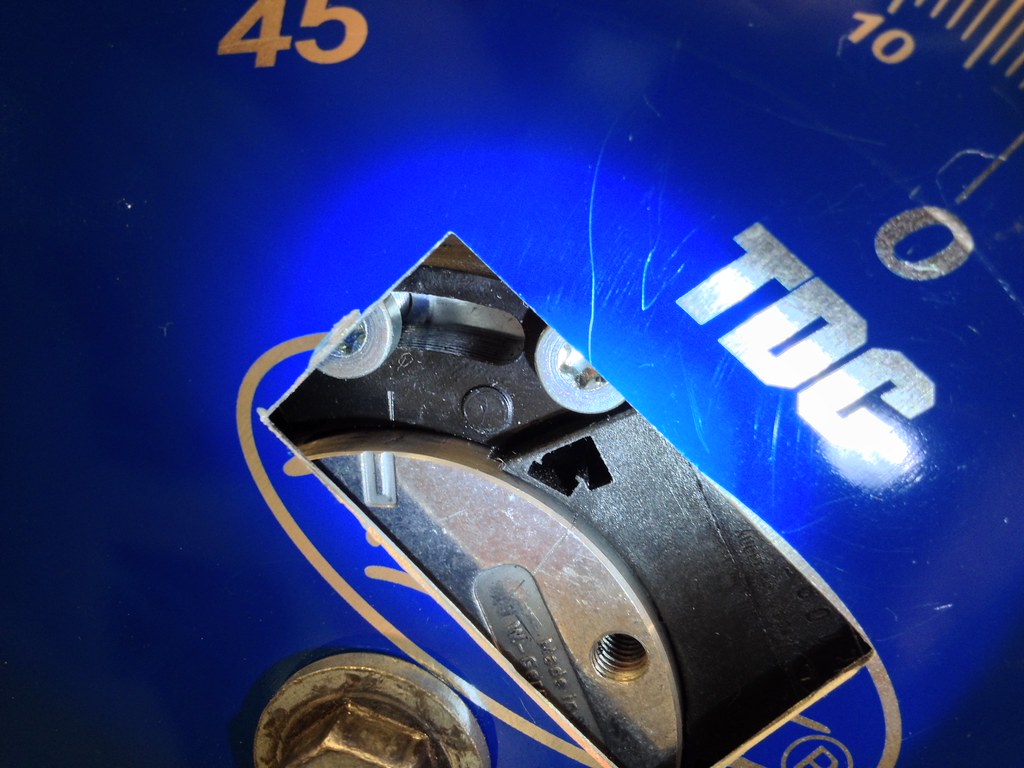
I cut a widow in my degree wheel so I could see what's going on. This first pic shows the degree wheel indicating the left piston is at 35° BTDC. There is a 3/16" long mark in the center of a little pocket that was machined onto the face of the rotor but I wouldn't know the significance of that marking until I measured everything. I read somewhere that PVL supplies the rotor 9919 as a blank and that the USA distributor (Penton Racing Products) bores the application specific taper and cuts the keyway and assigns their own part number 71030. So I don't know who put that timing mark on the rotor or if it meant something or nothing at all (again the generic instructions are not specific to my application).


This picture shows a close up of the rotor and stator marks. The TDC mark I made by scribing a line on the rotor is the faint line to the right that touches the upper left hand corner of the "Made in Germany" pocket. With the motor still at 35° BTDC (per the previous picture) the PVL rotor mark is almost bang on the PVL stator mark, which is really convenient for me! The two marks are perfectly aligned when the motor is at 33° BTDC. So in the future if I ever have to pull the motor apart, resetting the timing will be very easy. Aligning the PVL rotor mark with the PVL stator mark is a good place to start with the ignition timing.


Here is another picture showing the PVL timing marks. You can see the mark machined into the PVL mounting plate at 12 o'clock.


This picture is just to explain why the rotor TDC mark doesn't appear to line up with the degree wheel TDC indication. My homemade pointer made of 1/16" diameter welding rod is not in perfect alignment with the TDC mark machined onto the PVL mounting plate. My homemade pointer was bent and moved until it indicated TDC on the degree wheel when the motor was in fact at true TDC. I didn't bother to realign the degree wheel to match the rotor markings because it is easier to simply adjust the pointer than it is to get the degree wheel perfectly lined up when tightening the crank bolt with an impact driver.
 
Re: vintage race CB350 - rear brake linkage


Here are my rear brake rearset foot controls. Everybody has a different way of doing it. Many people flip the lever arm on the brake drum and use a bent tension rod to the foot lever. Really fancy people fabricate a cable actuator. But in my mind the stock tension rod is best: it's lightweight, simple, reliable, requires virtually no maintenance, there are no cables to snap and the brake pedal feel is highly consistent because the tension hardly changes at all throughout the swingarm's travel. The link rod angle from the foot lever to the lever arm isn't an ideal parallelogram so it loses some efficiency but it will have to suffice due to physical limitations. The link rod would be better in tension than in compression but the belly pan prohibits such an arrangement. As it is now the link rod is plenty strong enough to withstand buckling. I still need to shorten the link rod to accommodate two locking jam nuts for each rod end.


Close up view of the rear brake linkage arm. This will get cleaned up and painted black. R-clip, linkage arm pivot bolt and rod end hardware will get safety wired.
 
Re: vintage race CB350 - exhaust

Purchased new MotionPro cables for clutch and front brake because they're cheap ($16 each) and come with all new fittings. I then proceeded to shorten all the cables so they fit properly. Be forewarned: lead is known to cause cancer so don't inhale the fumes and wash your hands after handling. Really try to limit your exposure. Also, wear rubber gloves when working with the liquid solder flux. I didn't at first and ended up suffering chemical irritant contact dermatitis on my finger that was very aggravating. At first I thought it was just really dry skin but then it erupted into painful blisters resembling eczema. Took a trip to the dermatologist and a prescription steroid cream to treat it and I'm still not fully healed yet 2-3 weeks later.


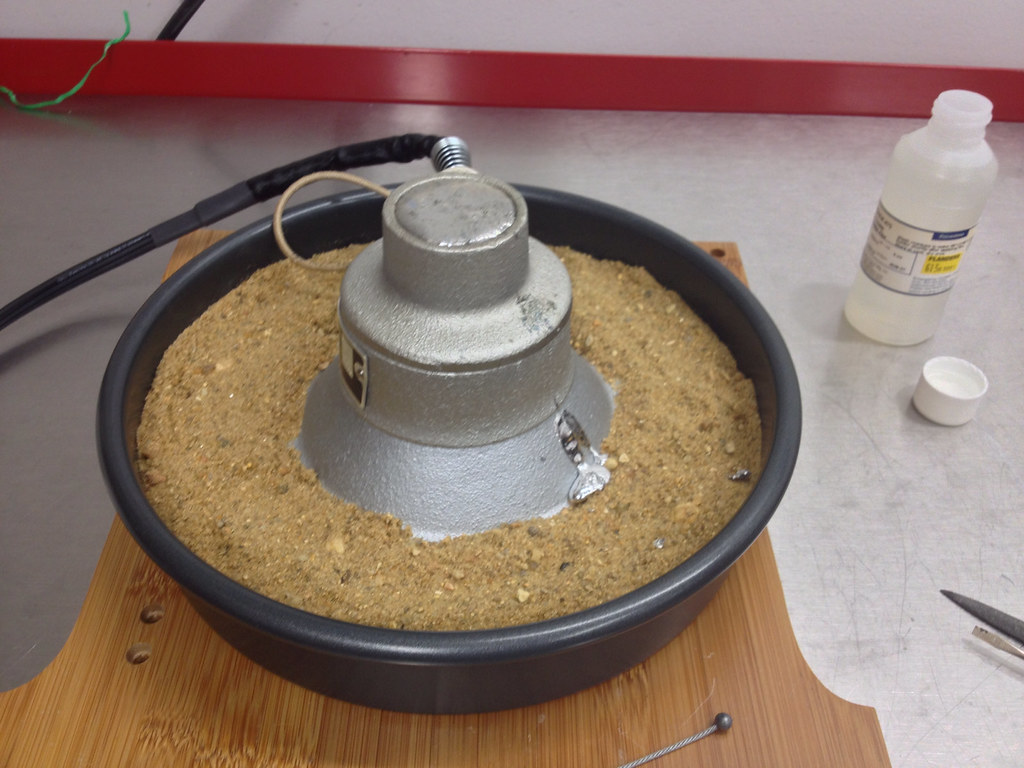
Esico Triton Model 12 Solder Pot. I bought this before I knew you could get cheap made in China solder pots on eBay. C'est la vie.


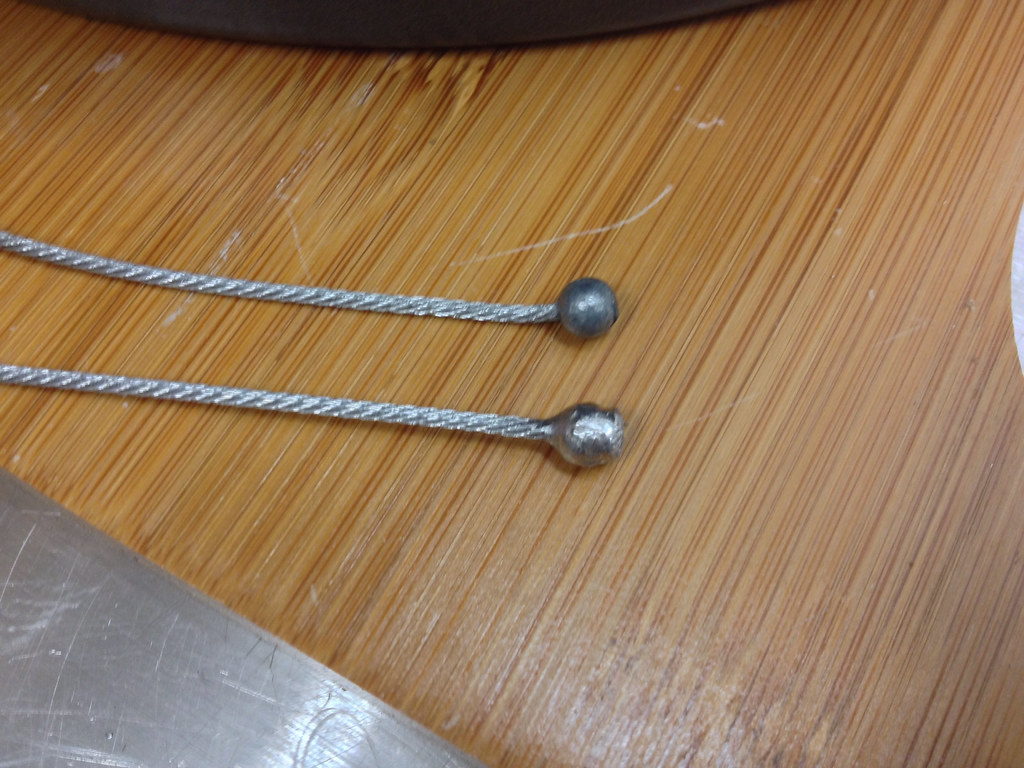
Motion Pro throttle cable end vs my shortened throttle cable end.


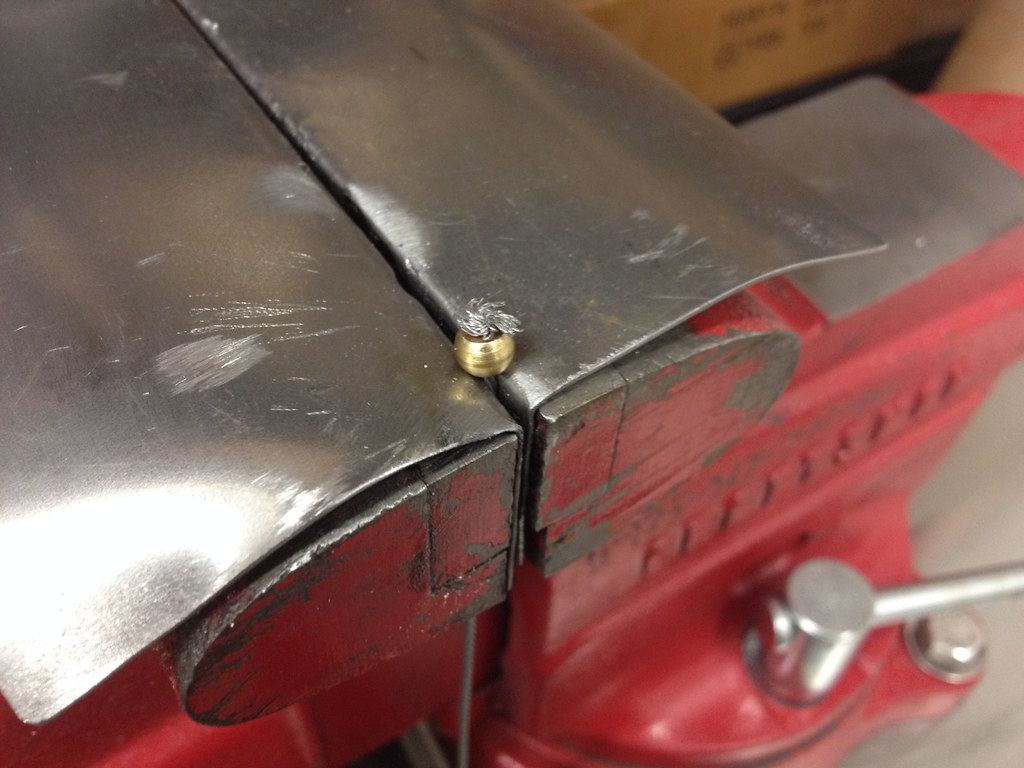
Dip the wire in flux and then tin the wire. Then slip the brass cable end on. Use ball peen hammer to peen the wires so they're splayed out. It is this action that gives the cable fittings their strength. The solder keeps the peened wires separated so they can't pull through the fitting. Then dip wire and cable end in flux and then dip in solder until the fitting is completely submerged but no further. Don't leave it in the solder bath too long or else the cable will wick up too much solder and become stiff and brittle. Once cooled trim the excess wire with file or grinding wheel so the cable end fits well inside the throttle assembly.


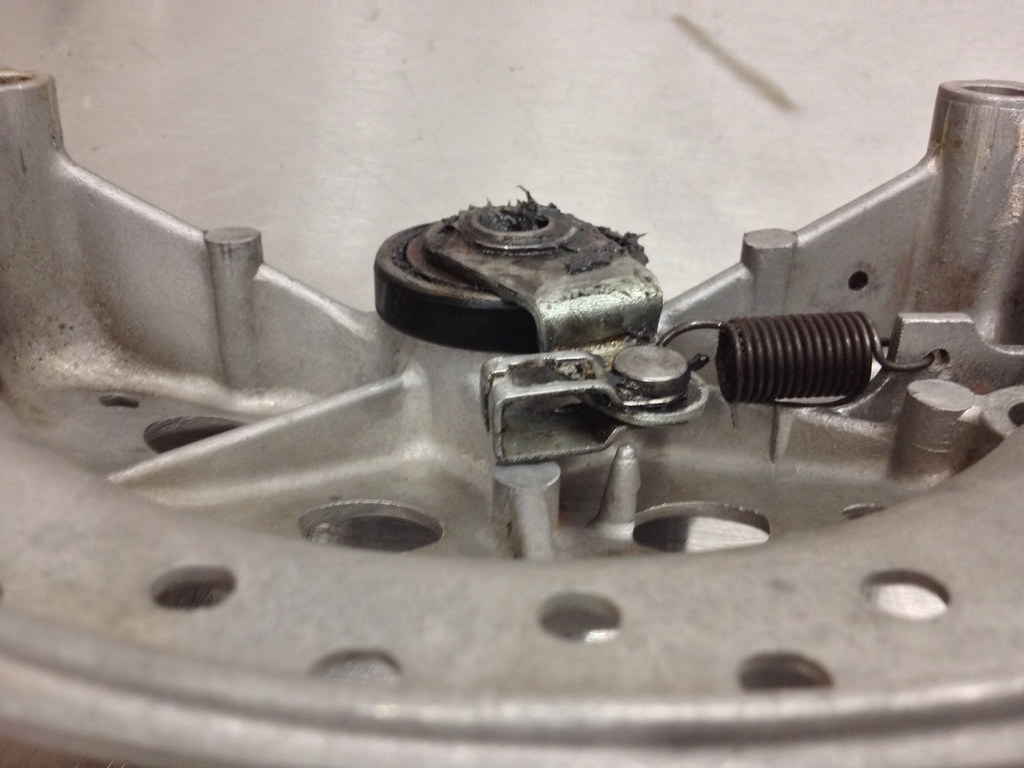
I played around with the clutch mechanism. Like most people, I'm having a hard time getting the adjuster into the sweet spot where the clutch will engage and disengage properly without over-traveling the adjuster mechanism. Must be a combination of my aftermarket Magura levers and modified cables. I will try fitting a slightly shorter return spring so that the clutch lifter lever arm starts in a better position to make the most of the limited amount of travel.

13221037053_1889f5d436_b.jpg

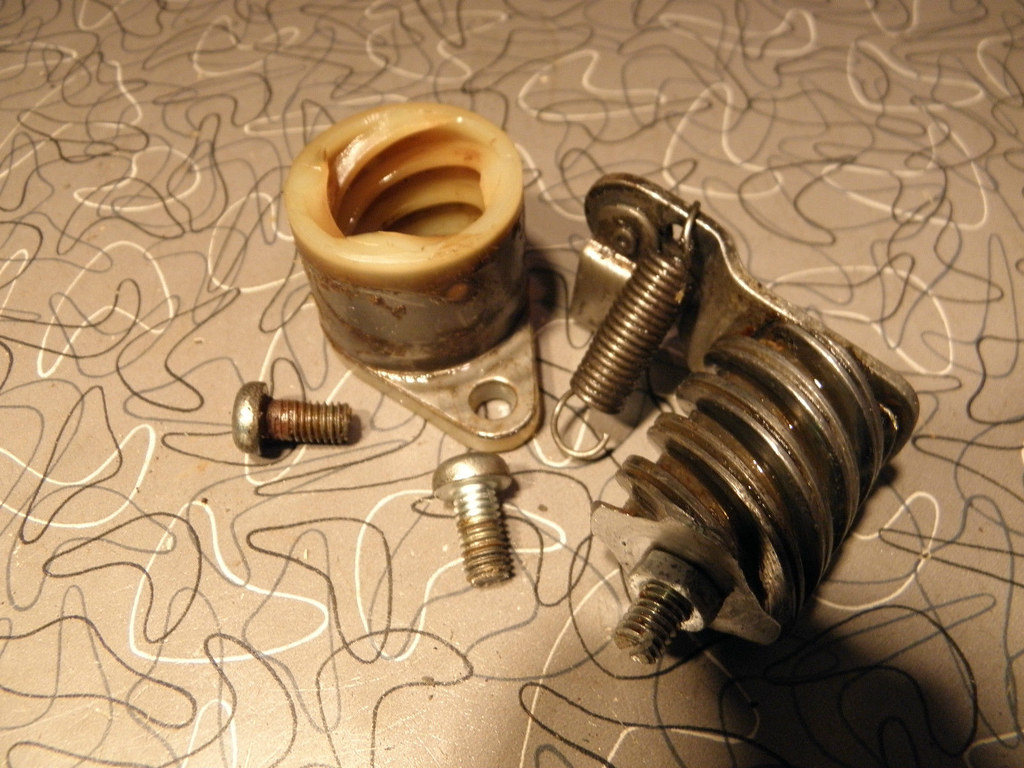
I picked up a couple worm drive clutch lifters to play with in the event I can't get the Honda mechanism to work for me. This is a popular CB350 race mod in the UK.


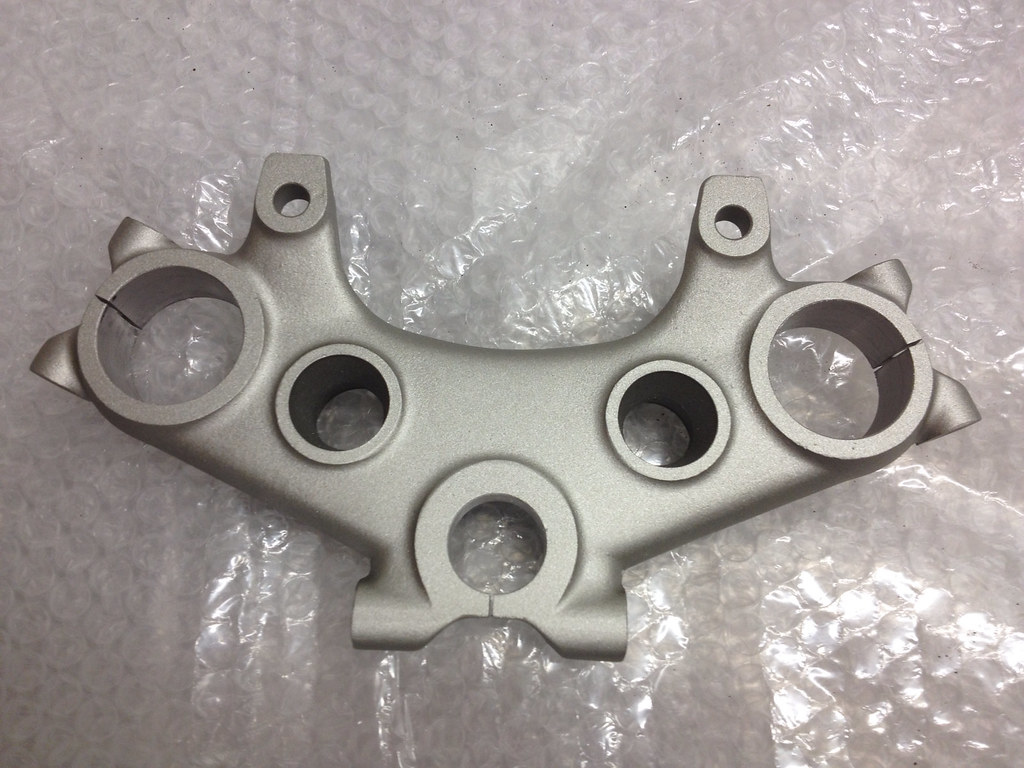
Fork top bridge painted.


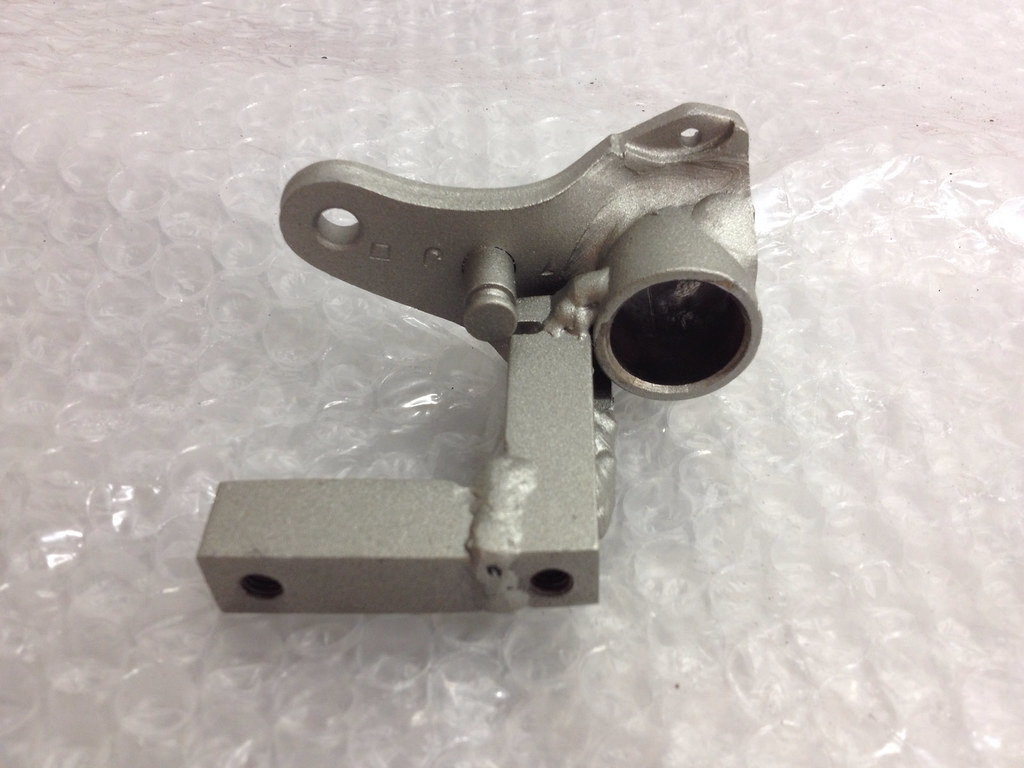
Rear brake link arm painted.


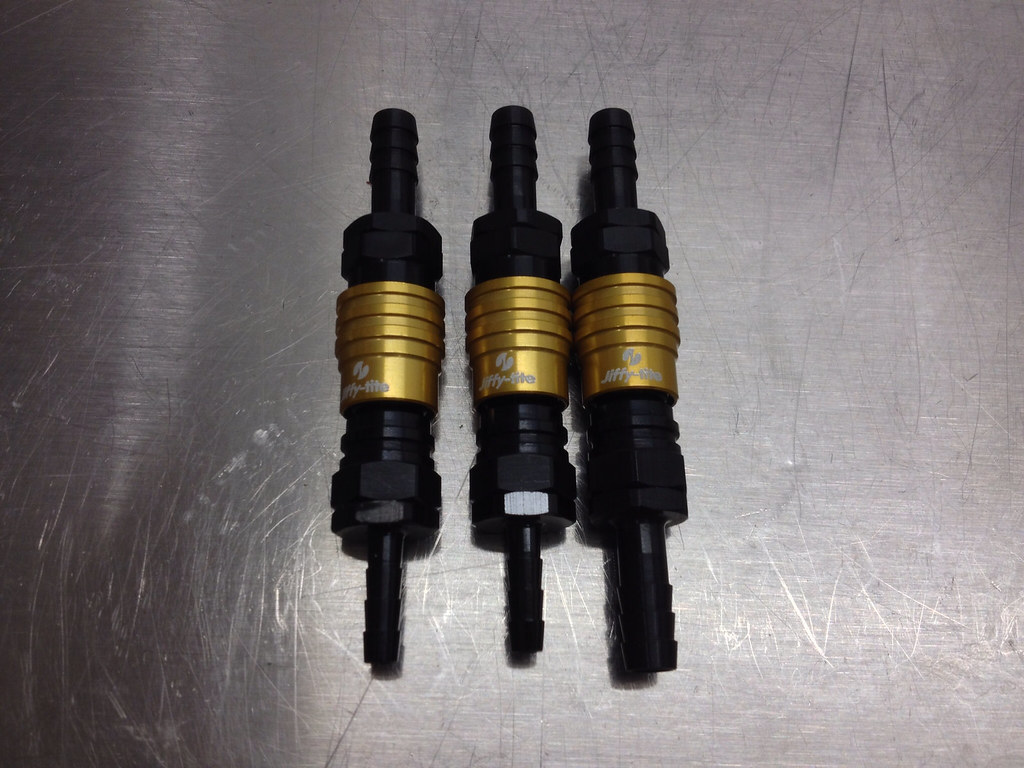
Bought some trick Jiffy-tite dry break fuel system quick disconnects.


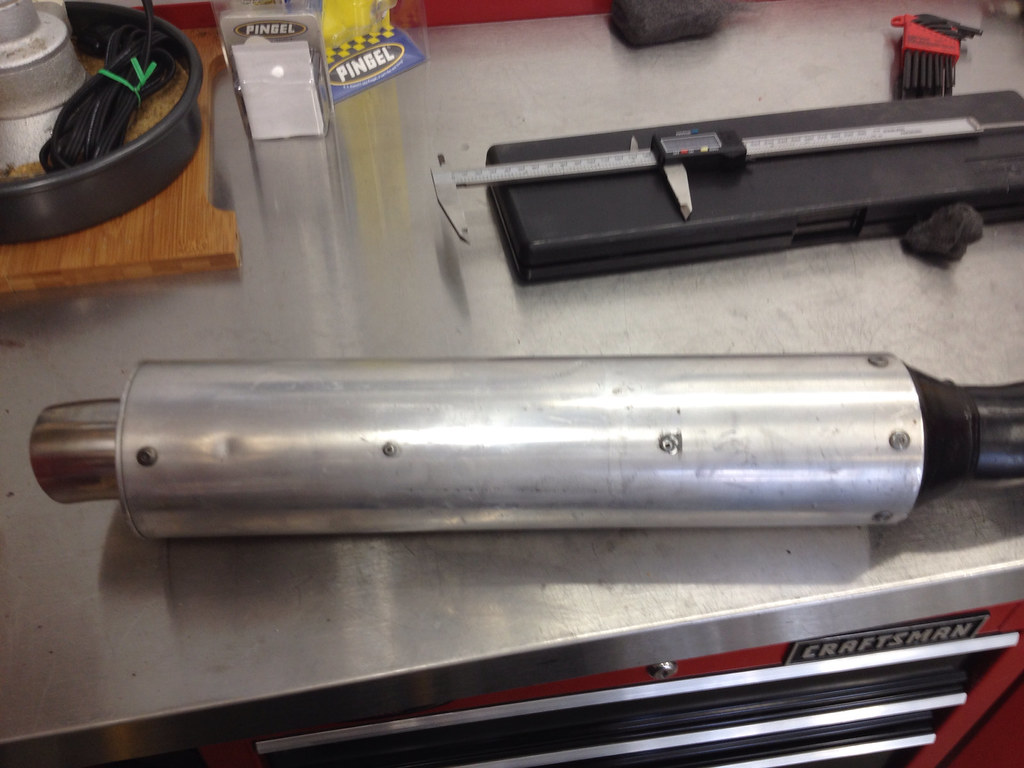
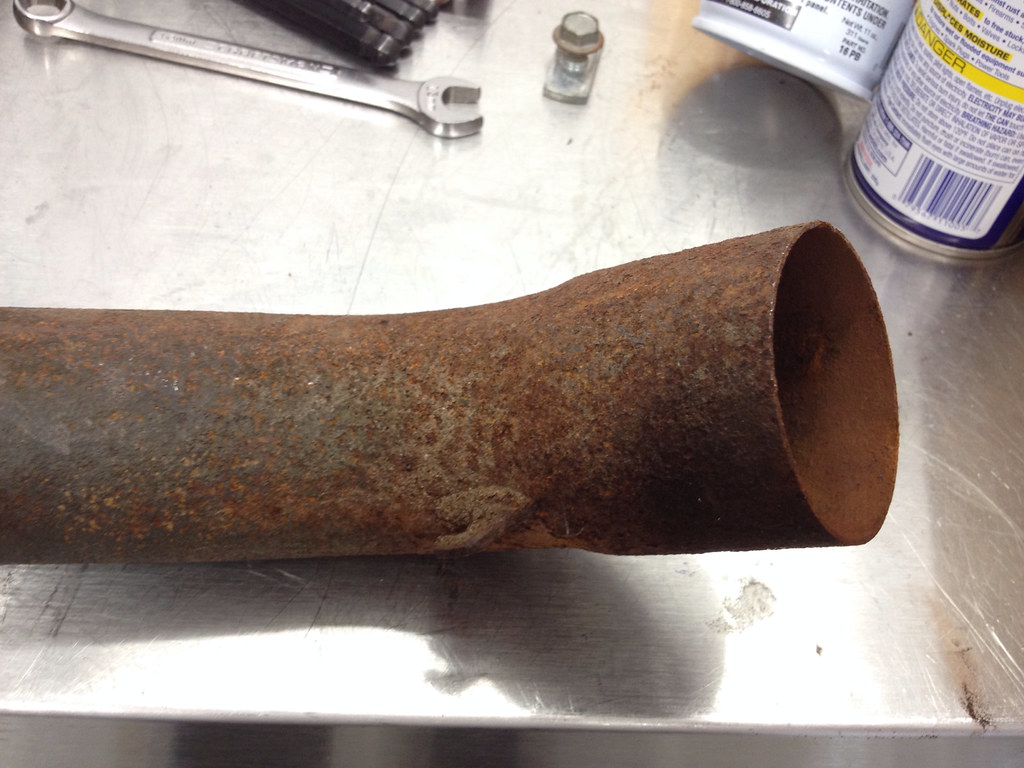
Picked up a crusty old slip on exhaust pipe at the salvage yard. Proceeded to restore it.


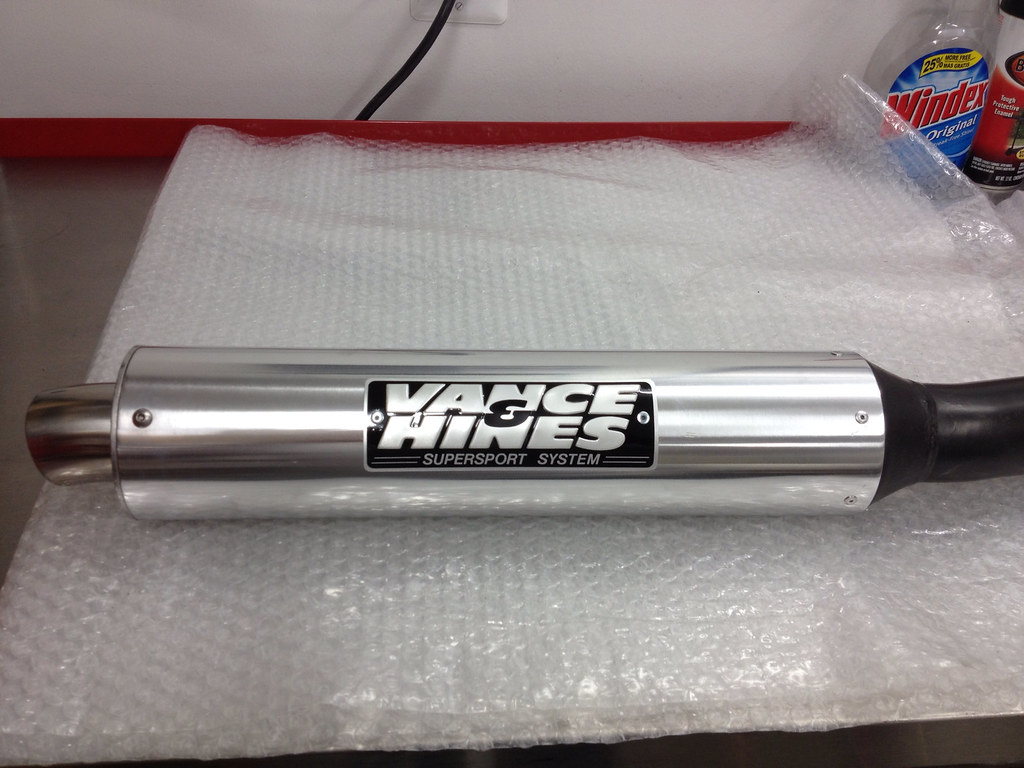
Vance & Hines Supersport System exhaust restored.


Mocking up exhaust hanger bracket. This exhaust setup is a little bit heavier than I would have liked but it will work for now. I just need to build a hanger bracket to support the muffler canister and fabricate a short pipe linking the 2-1 collector to the rear slip-on pipe section. Next year I'll make a shorter and lighter weight version. The nice thing about these old Vance & Hines Supersport systems is that replacement parts are still available and they're not too bulky unlike most modern tri-oval mufflers. So I can get a new baffle and can and cut them down to length. Eventually I may replace the steel slip-on pipe with fabricated stainless steel pipe work.

I also trimmed the fairing some more for kickstart lever clearance. Made little brackets to bolt the belly pan to the bike instead of using zip ties as originally planned. Fit freshly electroplated brake tension rod and brake adjuster hardware. Safety wired a few more things. etc......
 
Re: vintage race CB350 - exhaust

Keep going mate ;) nearly there real class build 8) great thread given me the idea for my next project cb500f hailwood race rep ( not the six cylinder tho ) :o haha
 
Re: vintage race CB350 - attending to details

This might be a long shot but what size spool mm's would you reccomend for my cb350? And are they long enough to act as the lower shock bolt + spool?

Keep it up, this is possibly the best thread and its hands down the most detail orientated build i have seen!

freedomgli said:
Up front I'm using the standard Pit Bull front stand with narrow lift pads and with forklift converter needed to adapt older stands to a head lift stand. Today you can simply buy their Hybrid Dual Lift Stand to achieve the same thing. Just be sure to let them know you have a vintage (narrow) front end. Also, opt for the removable handles to save shop space.

In the back I'm using a standard Pit Bull rear lift stand with narrow lift pads. Since I've added spools to my lower shock bolts I've purchased the optional Norton Commando spool lift arms to get the height I need.
 
Re: vintage race CB350 - attending to details

bubonicplay said:
This might be a long shot but what size spool mm's would you reccomend for my cb350? And are they long enough to act as the lower shock bolt + spool?
I have no idea what will work best for your setup. But on my bike I used Vortex Racing SP402S 10mm stand spools and a longer lower shock mount bolt (18-8 Stainless Steel Socket Head Cap Screw, M10 Thread, 75MM Length). My Works shocks have a pretty beefy alloy clevis for the bottom mount so you might not need to go as long for your shock bolt if you're using stock shocks with a thinner stamped steel bottom clevis.

bubonicplay said:
Keep it up, this is possibly the best thread and its hands down the most detail orientated build i have seen!

Thanks! It's a long way from perfect. But it's good enough for an entry level clubman type race bike using the stock frame. My next build will utilize a custom race frame and certain things will be done even better.
 
Re: vintage race CB350 - exhaust

I like your tank and seat combo, the fairing is killer! Where did you get that seat and what model is it?
 
Re: vintage race CB350 - exhaust

Both the seat and fairing came from Matt Tanner (monkey). I can't recall the models as he lists parts by application. But the seat is for a Honda CB350 and fairing is CR750 that I trimmed to fit.

www.tannermatic.com
 
Re: vintage race CB350 - exhaust

Long time no update. Finally got my 2-into-1 exhaust system mostly sorted out.
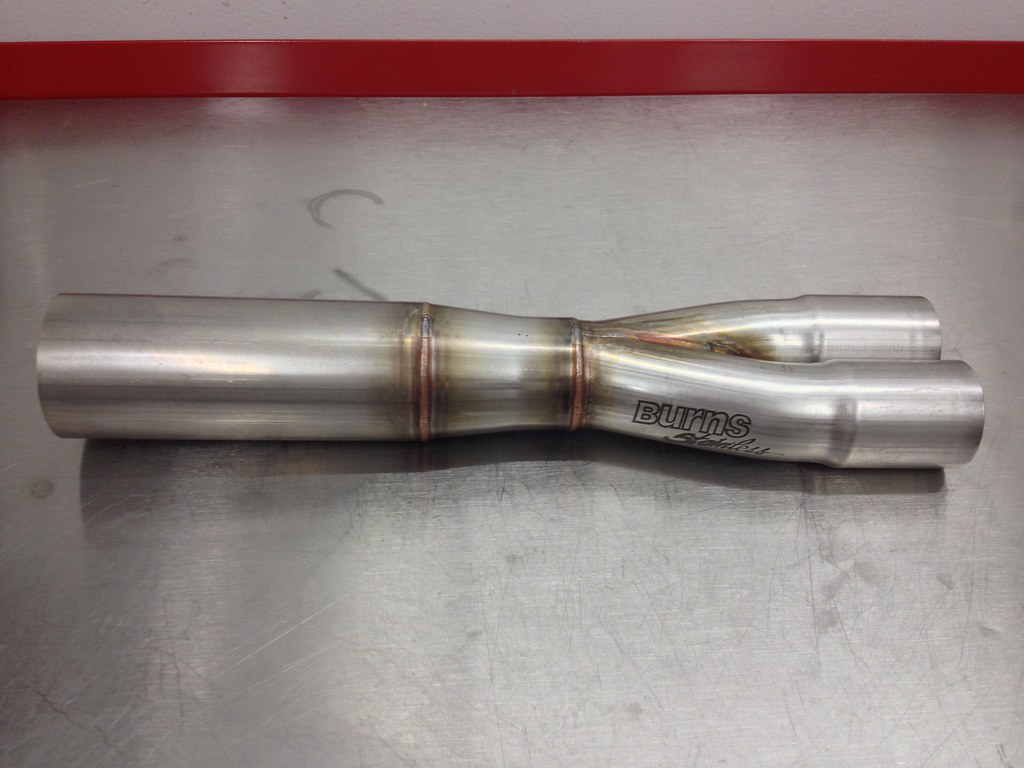

Merge collector

Received my custom fabricated 2-into-1 merge collector for 1.5" head pipes with a long transition to 2-1/8” outside diameter with a 6" long tail pipe. Made by Burns Stainless entirely of 304 stainless steel. Part number MC2-150-16-304.
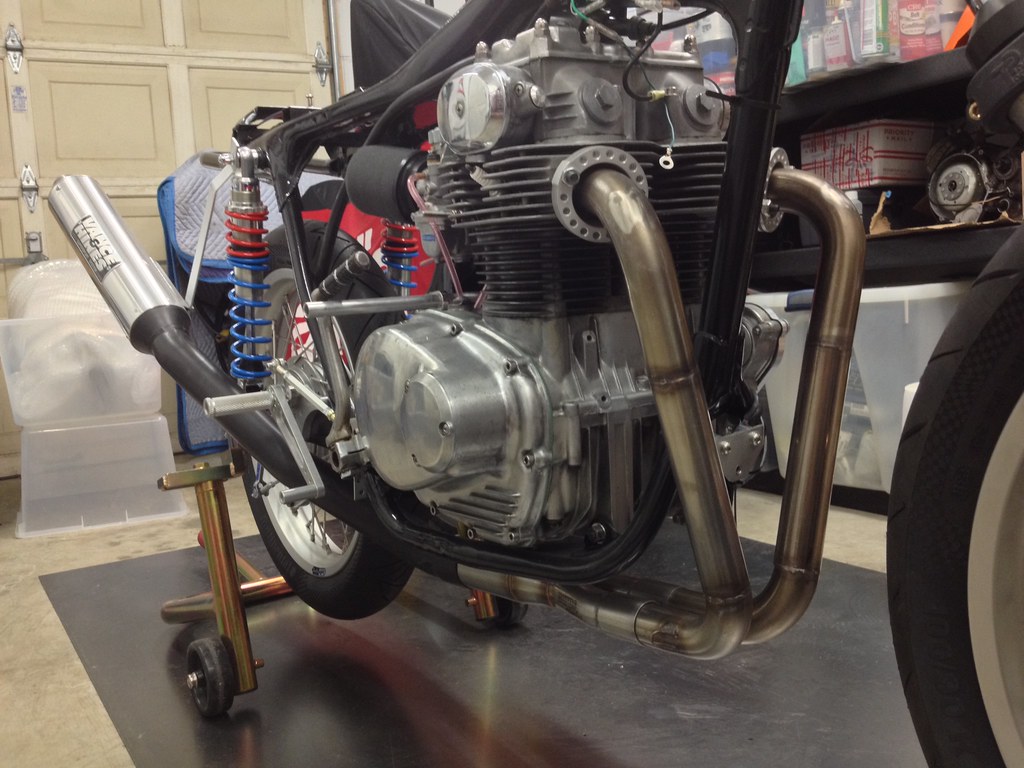

2-into-1 exhaust

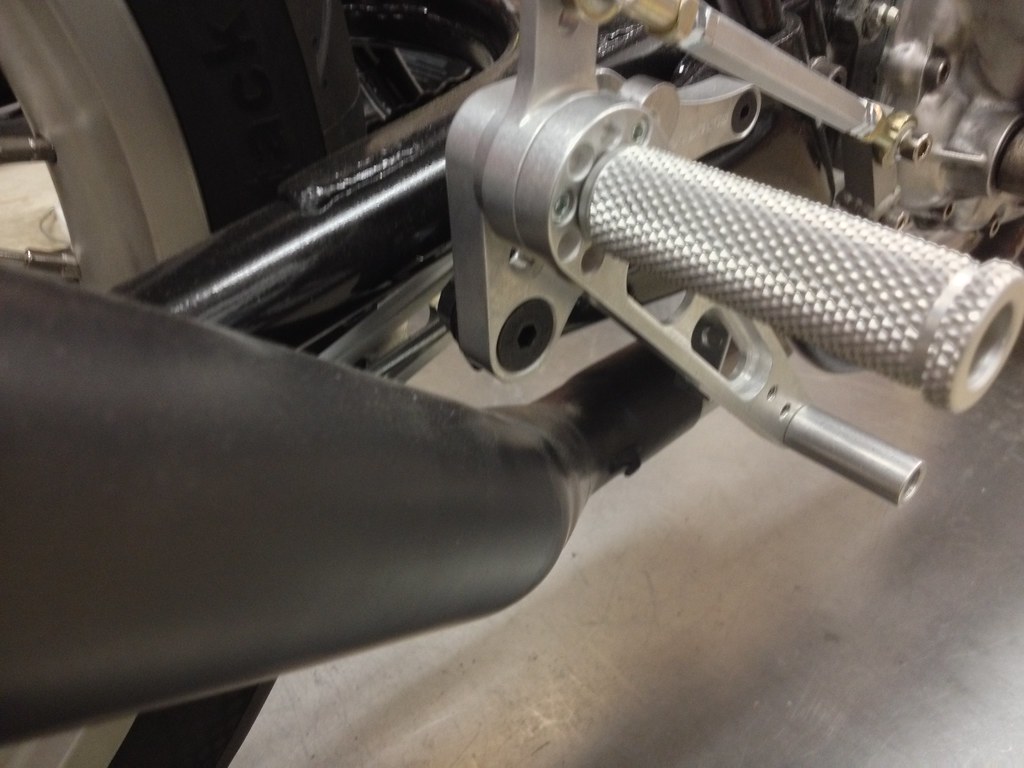
Everybody has their preferred exhaust setup. This 2-into-1 setup is a noise compliant system that offers plenty of ground clearance and lots room around the footpegs to operate the controls and kickstarter without interference.

I perhaps would have maybe preferred a more classic looking 2-into-2 system with open reverse cone megaphones like fitted to classic Grand Prix machines back in the 1960s. But the world has changed and race bikes now require mufflers, which more often than not means non-original exhaust systems must be used.

All design is a matter of compromise and this is the setup I ended up with given my requirements, budget, skills and time constraints. Next time I think I'll try making an exhaust system made of mild steel with custom baffles packed into the long cone megaphones with CNC machined billet aluminum end caps. But for now, onward and upward....
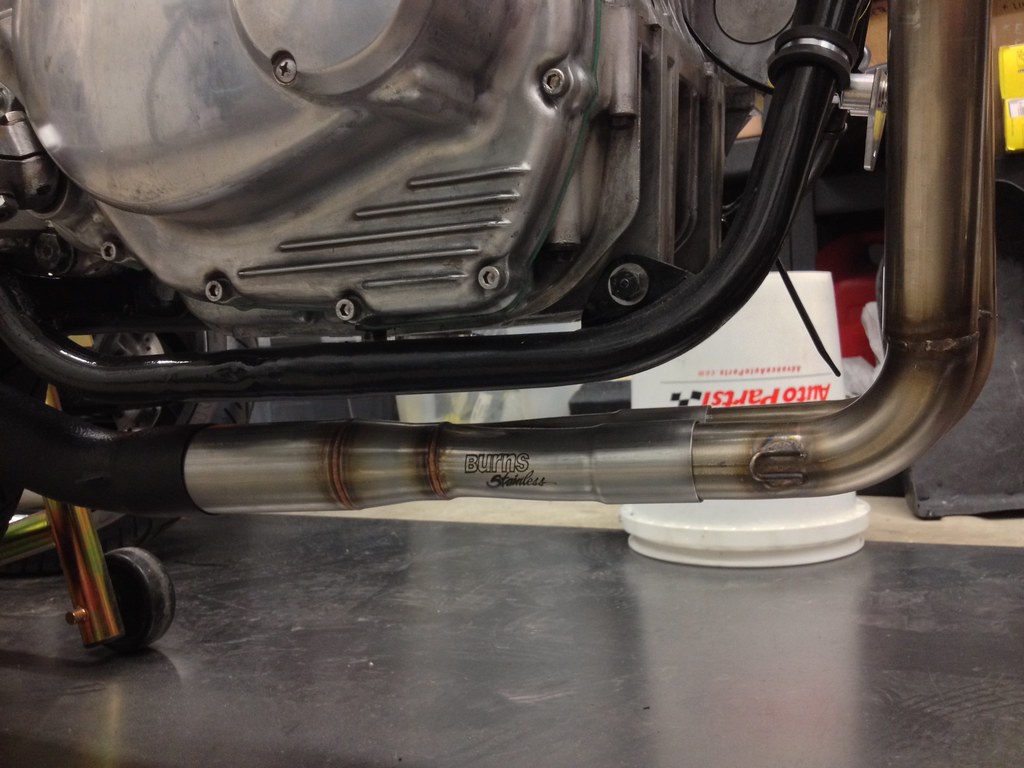

Side view exhaust pipe

Still need to weld spring hooks on so I can secure the head pipes to the collector and the collector to the rear slip-on muffler section.

I also need to take a picture with the bellypan installed.
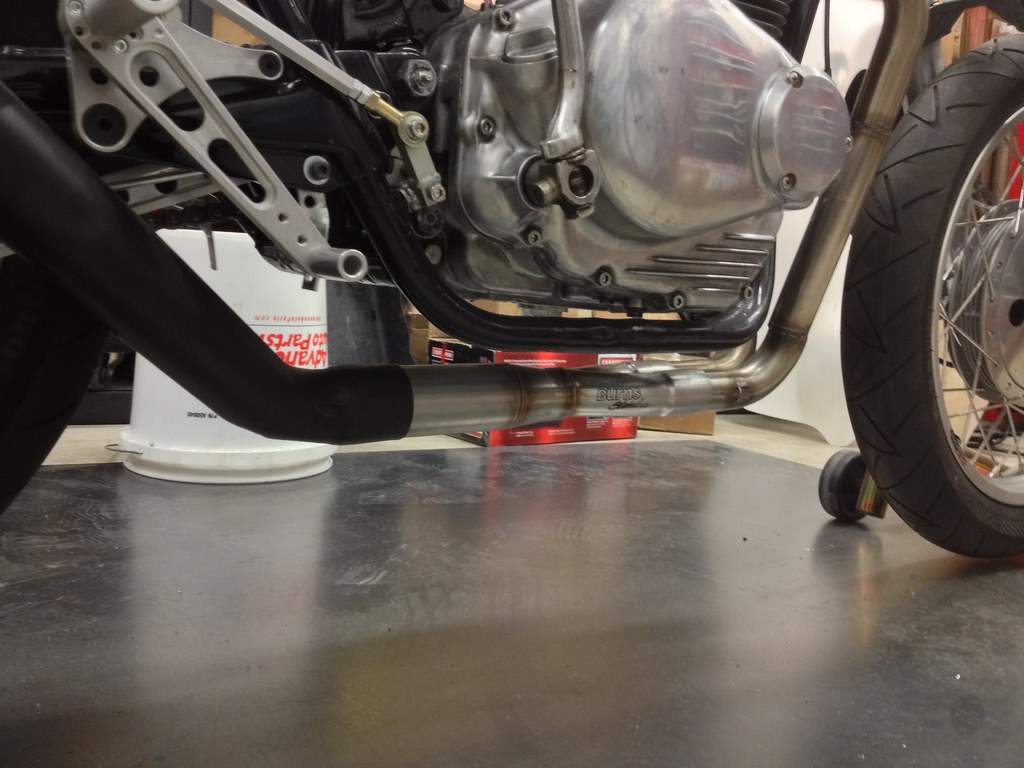

Untitled


Footpeg clearance

Footpegs will drag before the exhaust does.
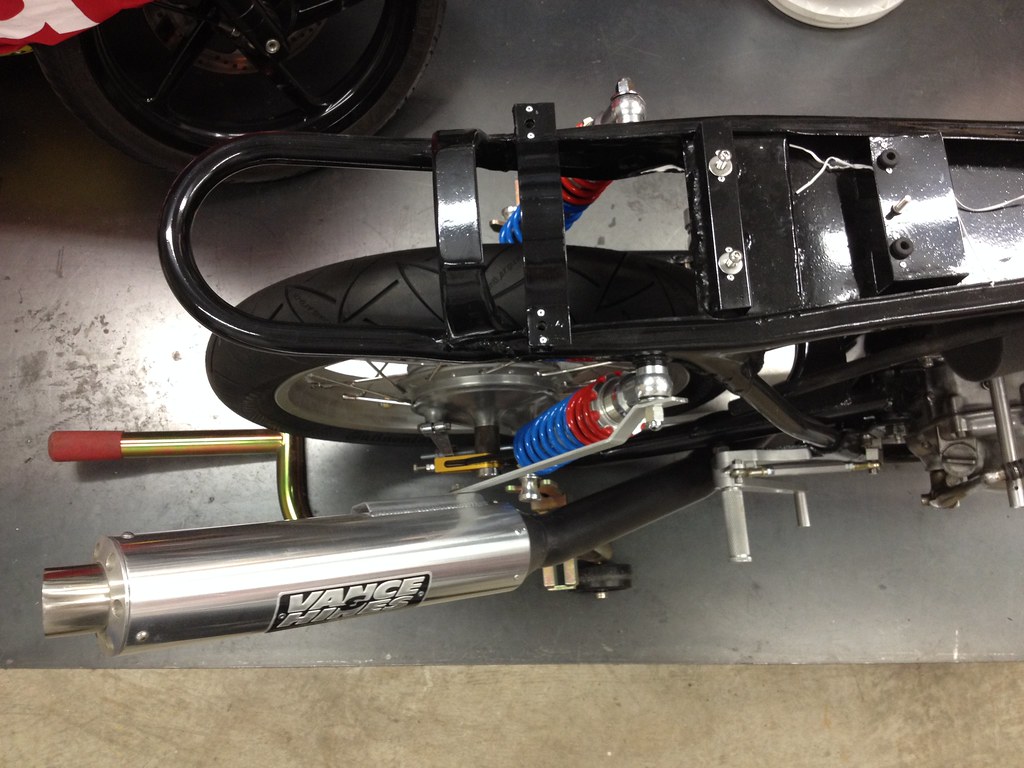

Top view

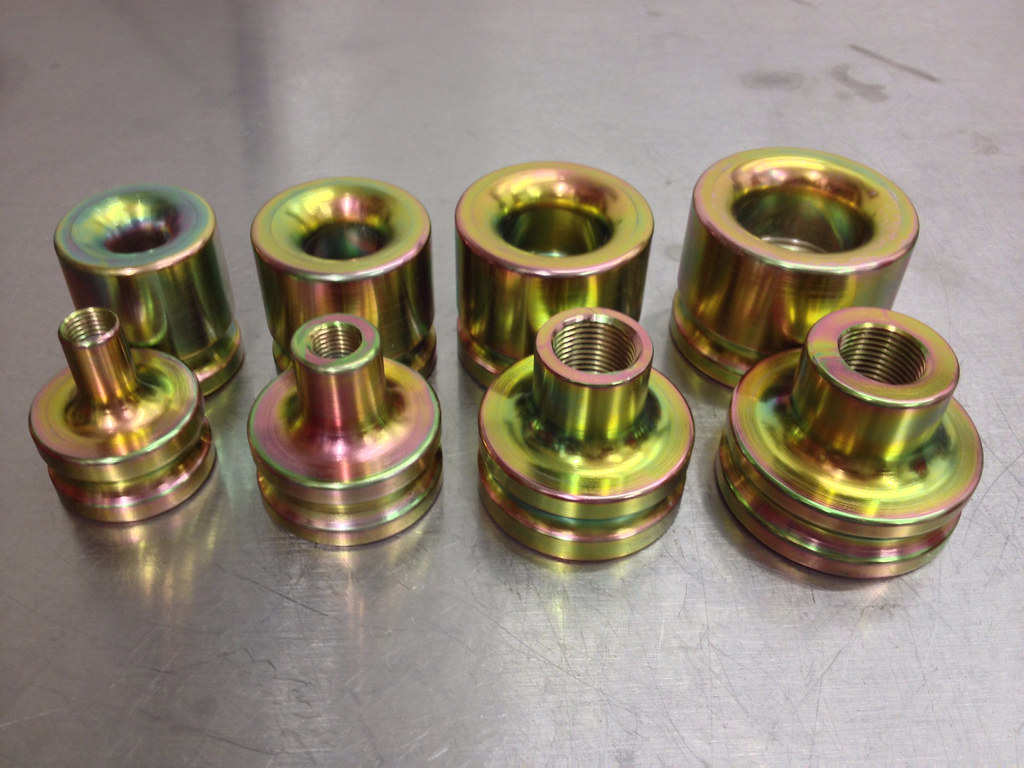
Muffler hanger will be getting a re-do. Aiming for a more upright mount attached to the frame seat loop made of laser cut steel that is bent into shape and welded. Finally gives me an opportunity to try out my new dimple dies.
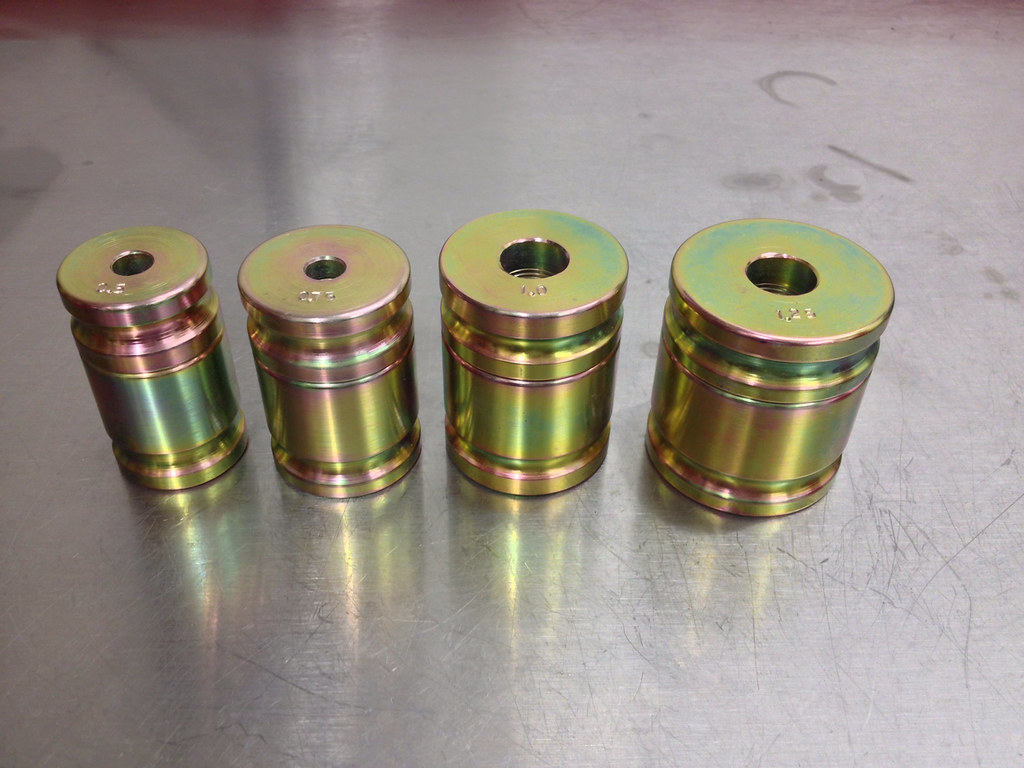

Dimple dies


Dimple dies

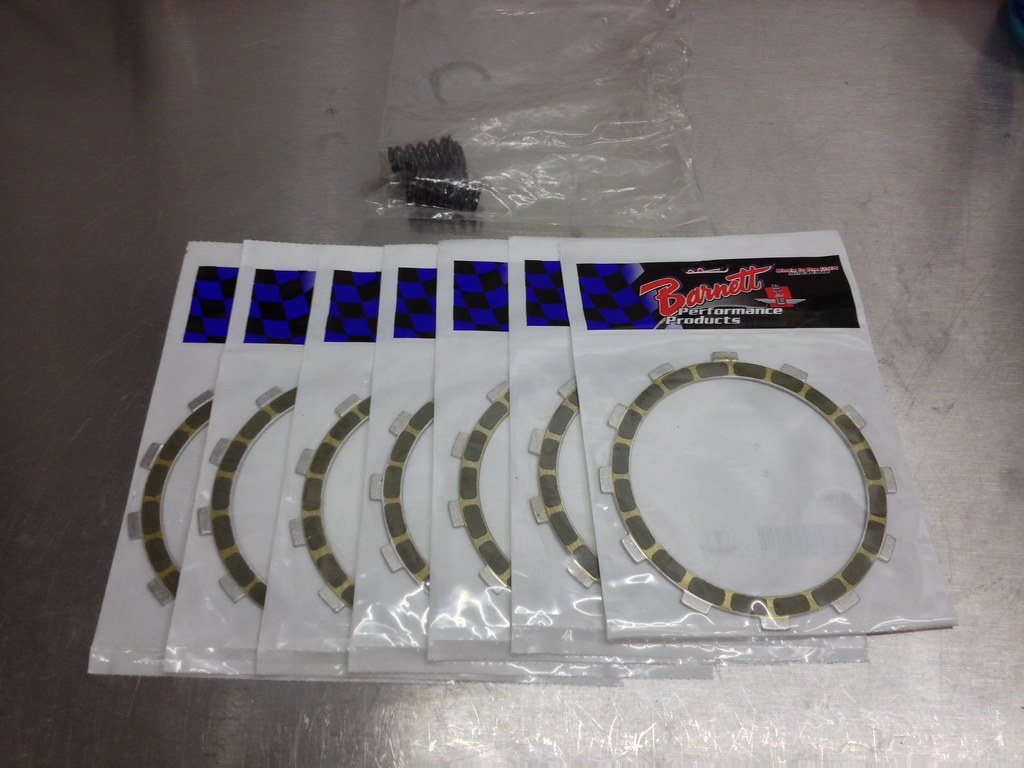
Barnett Kevlar clutch plates

Received my Barnett Kevlar clutch plates and HD springs. Yes, I know you need 8 of these, not 7 as pictured. I wish I had spent the money and installed them back when I had the motor all torn down for a rebuild to avoid rework. C'est la vie.

I also modified my sprocket cover to retrofit a Suzuki worm gear type clutch lifter mechanism that also received a modified lever arm. A lot of people question the need for this mod but given the other changes I've made to the clutch operating mechanism I felt it was worthy. I got the idea from Jon Sunter who race prepares CB350s over in the UK. This solves the problem of my aftermarket Magura clutch lever over-travelling the stock Honda ball and ramp clutch lifter mechanism. Unfortunately, the hand lever effort remains rather high despite proper cable routing and lubrication so I'm going to fabricate a custom lever arm for the clutch lifter that increases the mechanical advantage while still giving me the necessary travel so I'm in the sweet spot where the clutch doesn't slip nor drags under varying load and temperature. I could have just as easily decided to get a different multi-adjustable clutch lever from MSR, AVS, CRG, etc. but I wanted to maintain the classic Magura look. This is a perfect example how how one modification can snowball and require 4 more modifications to get the system working ideally. The end result should be a clutch that is easy to operate and maintain and is reliable.

 
Re: vintage race CB350 - exhaust

Are you running a belly pan??
Sometimes its a pain to get a belly pan to work with these 2 into 1 exhausts. Took me awhile to figure out a layout that I liked.
Here was my solution.
DSC01704x.jpg

DSC01699.jpg
 
Back
Top Bottom